How to improve memory and focus naturally: the Brainlive guide

Updated September 2026 · reviewed by the Brainlive Research Team. We are an independent information resource, not a medical provider, and this article is educational rather than medical advice.
To improve memory and focus naturally means using everyday sleep, movement, nutrition and gut habits — and, if you choose, well-studied nutrients like prebiotic fibers and spermidine — to help keep an already-healthy mind sharp and steady. It is about consistency over quick fixes, and it works alongside, not instead of, the guidance of your doctor.
The fastest route to a sharper, steadier mind, in one place.
- The goal
- Reduce the everyday fog and scattered attention that follow poor sleep, stress and skipped meals, so your mind stays clearer for longer.
- Biggest levers
- Sleep and movement matter most, closely followed by what you eat and how you tend your gut, which is now understood to talk to the brain.
- Quick win
- A short walk plus ten minutes away from screens can reset attention within a single afternoon.
- Where supplements fit
- Nutrients such as prebiotic fibers and spermidine can support the routine, but they are not a treatment for any disease.
- Timeframe
- Sleep and movement can help within days; nutrition and gut-focused habits usually build over several weeks to a few months, and results vary.

If you have ever lost a name mid-sentence or read the same paragraph three times, you have felt attention and memory in motion. For most people the aim is simply a clearer, steadier mind, and the levers with the most influence are the everyday ones. This guide walks through them in plain language and shows where a formula like Brainlive can play a supporting role.
What does it mean to improve memory and focus naturally?
Improving memory and focus naturally is the practice of using diet, activity, sleep, stress management and gut health to help your brain do what it already does: encode new information, hold attention, and recall what you need when you need it. It is not a cure and it is not magic; it is a set of small, repeatable choices that keep your mental peaks higher and your foggy valleys shallower. Two ideas anchor everything below: consistency beats intensity, and these habits stack — each helps a little, and together they help a lot. For the fuller picture, see our guide to building mental clarity naturally.
Why does focus fade and memory slip in the first place?
Attention is a limited resource, and modern life spends it quickly. Constant notifications fragment concentration into ever-shorter bursts; short or broken sleep leaves the brain without the overnight housekeeping that consolidates memory; chronic stress floods the system with cortisol, which is unhelpful for recall; and long sedentary stretches reduce the blood flow that keeps the mind alert. Add irregular meals and dehydration, and the result is the familiar mid-afternoon fog. The encouraging news is that every one of those factors is something you can nudge in the other direction.
What are the most effective everyday habits?
1. Protect your sleep — it is where memory is built
Sleep is the single most important lever for memory. During deep and REM sleep, the brain replays and files the day’s experiences, moving them from fragile short-term storage into durable long-term memory. Seven to nine hours on a consistent schedule does more for recall than any single food or supplement. Guard a regular bedtime, dim screens an hour before, and keep the room cool and dark. The role of sleep in consolidating what you learned during the day is reviewed by Walker & Stickgold, Neuron, 2004.
2. Move your body for a sharper brain
Physical activity is close behind sleep. Aerobic movement increases blood flow to the brain and supports the health of the hippocampus, the region most involved in forming new memories. You do not need a gym: a brisk daily walk, cycling, gardening or bodyweight exercise all count, and even a short movement break between focused work blocks helps reset attention. A systematic review and meta-analysis by Northey et al., British Journal of Sports Medicine, 2018 found that exercise interventions improved cognitive function in adults older than 50. If that is the part you came for, read easing brain fog naturally next.

3. Feed the gut-brain axis
One of the most active areas of nutrition research is the gut-brain axis — the two-way conversation between the trillions of microbes in your gut and your brain. Feeding beneficial gut bacteria with prebiotic fibers is emerging as a meaningful lever for whole-body wellness, and it is the idea at the heart of Brainlive’s formula. Whole plants, fermented foods and fiber-rich meals all support that ecosystem. The pathways that carry that traffic — the vagus nerve, immune signalling, microbial metabolites and hormones — are mapped in detail in a major review by Cryan et al., Physiological Reviews, 2019.
4. Train attention and manage stress
Attention is trainable. Single-tasking, short focused sprints followed by real breaks, and a few minutes of slow breathing or mindfulness each day all strengthen the ability to concentrate and lower the stress load that clouds memory. Even a two-minute pause with the eyes off screens can restore focus for the next task.
5. Stay hydrated and mind your stimulants
The brain is famously sensitive to dehydration; even mild fluid loss can dull concentration. Water and unsweetened tea are steadier choices than a fourth coffee, and keeping caffeine to the morning protects the very sleep that memory depends on.
See how Brainlive fits your daily routine →
Which nutrients are part of the conversation?
Supplements are a supplement to the habits above, not a substitute, and never a treatment for any condition. Still, a handful of nutrients have become part of the brain-and-gut conversation. Here is a snapshot of the ones inside Brainlive.
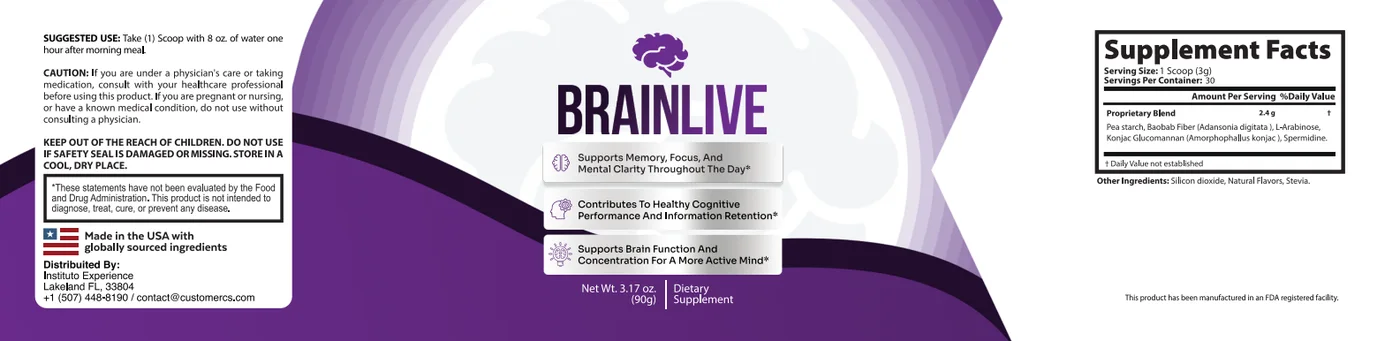
| Nutrient | What it is | Traditional / general role |
|---|---|---|
| Pea starch | Resistant starch | A prebiotic fiber that reaches the lower gut, where it feeds beneficial bacteria that form part of the gut-brain axis. |
| Baobab fiber | Fruit fiber | A traditional African food, naturally rich in soluble prebiotic fiber. |
| Konjac glucomannan | Soluble fiber | One of the most studied prebiotic and satiety fibers, long used as a food in East Asia. |
| L-arabinose | Plant sugar | Studied for its role in how the body handles dietary carbohydrates and steadier everyday energy. |
| Spermidine | Polyamine | Occurs naturally in foods like wheat germ; studied for its role in autophagy, the body’s cellular renewal. |
Brainlive brings these together in one naturally flavored scoop rather than a pill. For a closer look at the mechanism, read our guide to the gut-brain axis, or see the full ingredients section.
Make it a daily habit
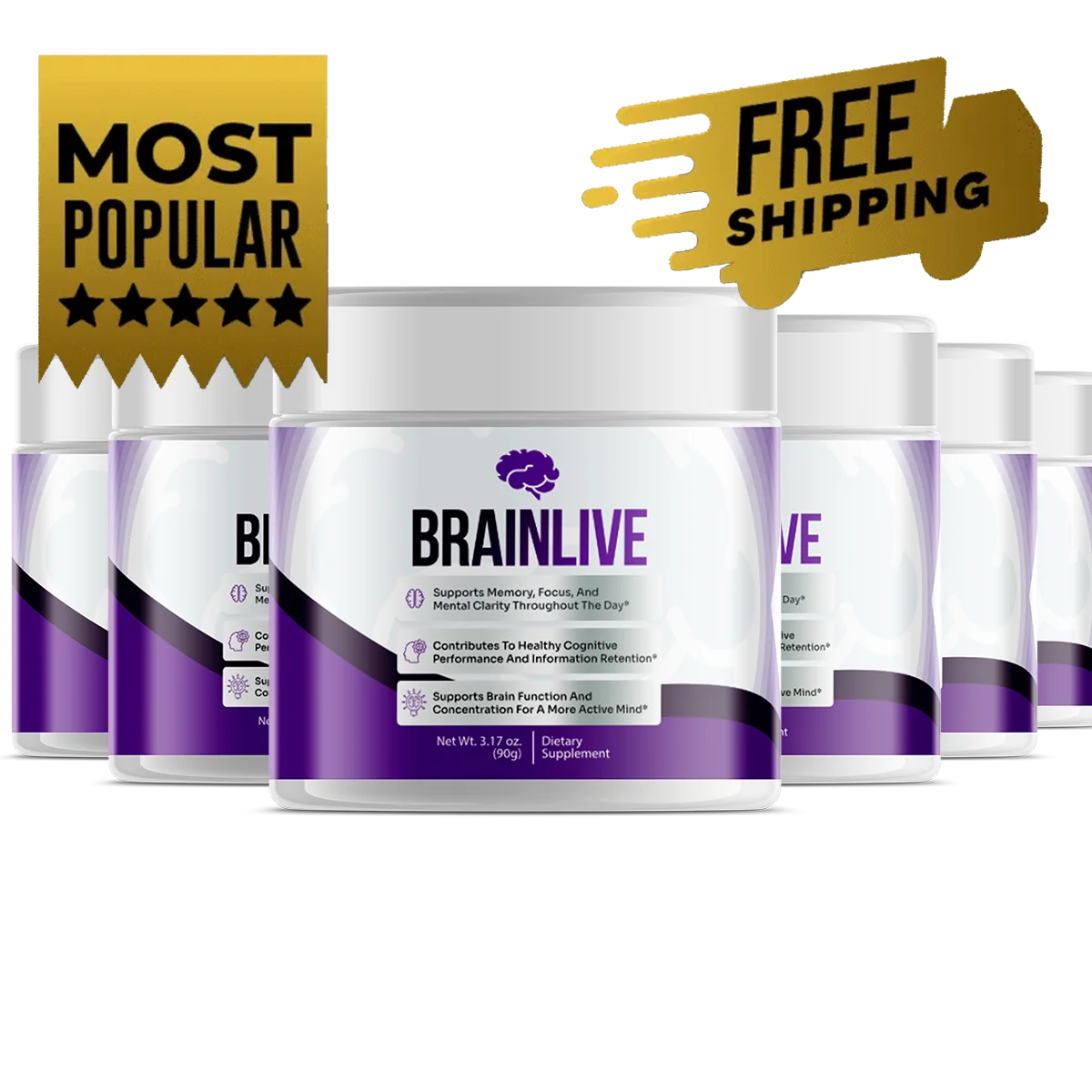
Brainlive is a once-daily scoop pairing prebiotic fibers with L-arabinose and spermidine. The six-tub bundle is the best value at $49 per tub, with free U.S. shipping and a 60-day guarantee.
Order Brainlive — from $49/tubHow do you build a simple daily routine?
The best routine is the one you will keep. Rather than overhauling everything at once, stack one small habit at a time until each feels automatic:
- Anchor a consistent wake and sleep time so memory gets its overnight filing done.
- Take a 10-minute walk after your largest meal, or between work blocks.
- Build fiber into every meal — vegetables, beans, whole grains and fruit.
- Single-task in short sprints with a real break between them.
- Hydrate first, caffeinate early, and keep the afternoon lighter on stimulants.
- Take any supplement at the same time daily — for Brainlive, one scoop stirred into water after breakfast.
Which habits work fastest? An at-a-glance table
A “fast” habit is one you can feel within a day or two; a “slow” habit reshapes your baseline over weeks. Both matter. This table sorts the core habits by how quickly they tend to help and how much effort they ask.
| Habit | Typical time to notice | Everyday effort |
|---|---|---|
| Screen break + short walk | Same day | Low |
| Hydration through the day | Same day | Low |
| Consistent sleep schedule | Days | Medium |
| Higher-fiber, whole-food meals | Days to weeks | Medium |
| Regular aerobic activity | Weeks | Medium |
| Gut-focused nutrition & supplements | Weeks to months | Higher |
Consistency turns any of these into a steadier month. Because gut-focused nutrients build their support gradually, most people choose a multi-month supply so they do not run out mid-routine — compare the packages and pricing on the homepage.
When should you talk to a doctor?
Natural habits are for supporting an already-healthy mind; they are not a replacement for medical care. Speak with your doctor if you are pregnant or nursing, under 18, take any medication, have a diagnosed condition, or notice persistent or worsening symptoms such as significant memory loss, confusion or mood changes. A quick conversation ensures anything you add fits safely with your care.
Frequently asked questions
Can you really improve memory and focus naturally?
For an already-healthy mind, yes — everyday sleep, movement, nutrition, hydration and gut habits are the biggest levers, and they compound over time. They complement, rather than replace, medical care.
What is the single most important habit for memory?
Sleep. During deep and REM sleep the brain consolidates the day’s experiences into durable memory, so a consistent seven-to-nine-hour schedule does more for recall than any single food or pill.
Do prebiotic fibers and spermidine help focus?
They are part of the gut-brain conversation: prebiotic fibers feed beneficial gut bacteria, and spermidine is studied for cellular renewal. They are a support to good habits, not a treatment, and results vary.
How long before I notice a difference?
Sleep and movement can help within days, while nutrition and gut-focused habits usually build over several weeks to a few months. Brainlive’s nutrients work gradually, and individual results vary.
Does exercise really make you think more clearly?
Yes. Aerobic activity increases blood flow to the brain and supports the hippocampus, the region central to forming new memories, so even a daily walk can sharpen attention.
Can I support focus without cutting caffeine entirely?
For most people, yes. Keep caffeine to the morning so it does not disturb the sleep your memory depends on, stay hydrated, and lean on short screen breaks to reset attention.
Try Brainlive risk-free for 60 days →
Brainlive is a dietary supplement, not a treatment for any medical condition. These statements have not been evaluated by the Food and Drug Administration. This product is not intended to diagnose, treat, cure or prevent any disease. Always consult a qualified healthcare professional about your individual needs.
References & further reading
- National Center for Complementary and Integrative Health (NCCIH). Probiotics: What You Need To Know. nccih.nih.gov/health/probiotics-what-you-need-to-know
- National Institutes of Health, National Institute on Aging. Cognitive Health and Older Adults. nia.nih.gov/health/cognitive-health-and-older-adults
- Examine.com. Spermidine — evidence-based summary. examine.com/supplements/spermidine
- Northey JM, Cherbuin N, Pumpa KL, Smee DJ, Rattray B. Exercise interventions for cognitive function in adults older than 50: a systematic review with meta-analysis. British Journal of Sports Medicine, 2018. pubmed.ncbi.nlm.nih.gov/28438770
- Examine.com. Glucomannan (konjac fiber). examine.com/supplements/glucomannan
- Walker MP, Stickgold R. Sleep-dependent learning and memory consolidation. Neuron, 2004. pubmed.ncbi.nlm.nih.gov/15450165
- Cryan JF, O’Riordan KJ, Cowan CSM, et al. The Microbiota-Gut-Brain Axis. Physiological Reviews, 2019. pubmed.ncbi.nlm.nih.gov/31460832
These references describe the ingredients and habits in general terms and do not constitute evidence that any product treats, cures or prevents any condition.
Keep reading: the best foods for brain health and memory · the gut-brain axis explained · back to the Brainlive blog · homepage.