Resistant starch as a prebiotic in Brainlive: the pea starch guide

Updated September 2026 · reviewed by the Brainlive Research Team. We are an independent information resource, not a medical provider, and this article is educational rather than medical advice.
Resistant starch is a type of starch that resists digestion in the small intestine and travels intact to the large intestine, where it feeds beneficial gut bacteria — which is exactly why it is classified as a prebiotic fiber rather than a simple source of energy. Brainlive uses pea starch as a lead prebiotic fiber for this reason: the resistant fraction reaches the lower gut and becomes food for the microbes that sit at one end of the gut-brain axis.
What resistant starch is, and why it sits at the heart of the Brainlive formula.
- What it is
- A starch that resists digestion, passing undigested to the large intestine where gut bacteria ferment it — the definition of a prebiotic fiber.
- How it differs
- Ordinary starch is broken down to glucose and absorbed for energy; the resistant fraction is not, so it acts as food for microbes instead of sugar for you.
- Why pea starch
- It is a plant-based, allergen-friendly source of resistant starch that mixes cleanly into a daily powder and delivers fiber to the lower gut.
- The honest limit
- Resistant starch supports the gut microbiome; it is not a treatment for any disease, and the brain-related evidence is still developing.
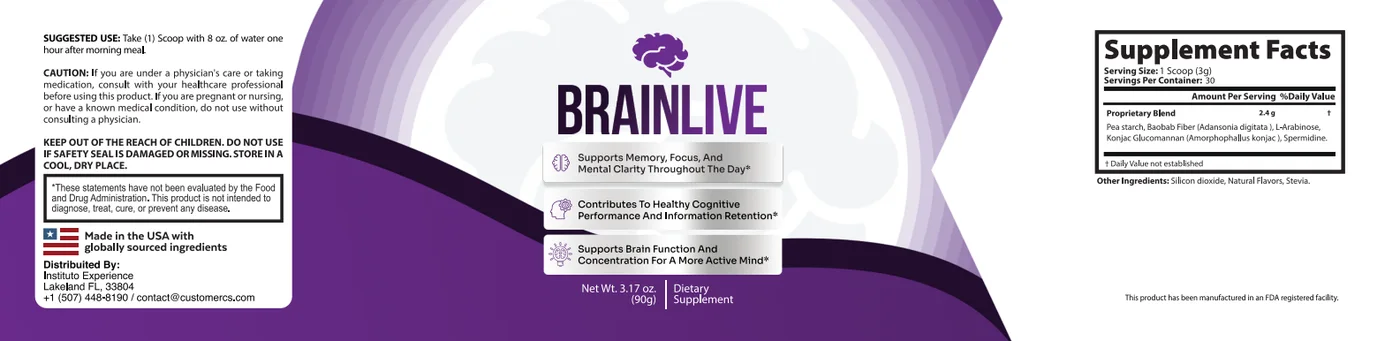
Most starch you eat — in bread, rice, potatoes and pasta — is digested quickly and absorbed as glucose. A small but important fraction behaves differently: it slips past digestion and arrives in the lower gut, where it becomes a feast for beneficial bacteria. That fraction is resistant starch, and it is why Brainlive leans on pea starch.
What is resistant starch, and why is it called a prebiotic fiber?
Resistant starch is any starch that escapes digestion in the small intestine and reaches the colon intact, where it is fermented by the gut microbiome. That single behavior — passing through undigested and then feeding bacteria — is what earns it the label “prebiotic fiber.” A prebiotic is not a live microbe like a probiotic; it is the food that beneficial microbes thrive on. When those bacteria ferment resistant starch, they produce short-chain fatty acids such as butyrate, which fuel the cells lining your colon. In practical terms, it acts far more like fiber than like the fast-burning starch in white bread. The metabolic behaviour of resistant starch is reviewed by Higgins, Journal of AOAC International, 2004.
How does resistant starch differ from ordinary starch?
The difference between resistant starch and ordinary starch comes down to where each one ends up: ordinary starch is broken into glucose and absorbed in the small intestine, while resistant starch survives that journey and is fermented in the large intestine instead. Ordinary starch answers your body’s need for quick energy; resistant starch answers your gut bacteria’s need for food. Because it is not absorbed as sugar, it carries fewer usable calories per gram than digestible starch.
Why does most starch never reach your lower gut?
Your small intestine is armed with enzymes, chiefly amylase, that snip common starch into glucose within minutes. Resistant starch has a physical or chemical structure those enzymes struggle to break — it may be locked inside intact cell walls, tightly packed into dense granules, or chemically arranged so amylase cannot get a grip. Nutrition scientists sort it into several types, summarized below.
| Type | Where it is found | Why it resists digestion |
|---|---|---|
| RS1 | Whole grains, seeds, legumes | Physically trapped inside intact plant cell walls the gut cannot fully break open. |
| RS2 | Raw potato, green banana, some pea and legume starches | Packed into dense, compact granules that enzymes cannot easily access. |
| RS3 | Cooked-and-cooled potato, rice and pasta | Retrograded — the starch recrystallizes as it cools, making it resistant. |
| RS4 | Chemically modified starches in processed foods | Altered structure that the body’s enzymes do not recognize. |
Pea starch contributes to the naturally resistant categories, a practical way to add prebiotic fiber to a daily drink mix rather than relying on cooling leftover rice.
Why did Brainlive choose pea starch as its lead prebiotic fiber?
Brainlive chose pea starch as a lead prebiotic fiber because it is a plant-based, allergen-friendly source of resistant starch that dissolves cleanly into a once-daily powder and reliably delivers fiber to the lower gut. Peas are naturally free of gluten and dairy, which suits a formula built for everyday use, and the mild, neutral taste of the starch keeps the scoop pleasant to drink. Rather than a single fiber, Brainlive pairs pea starch with other prebiotic fibers — baobab, konjac glucomannan and L-arabinose — so the microbiome is offered a varied menu instead of one repeated dish. For the fuller picture, see our guide to how prebiotic fiber feeds the brain.

It is worth being precise about the claim here: pea starch feeds beneficial bacteria, and a healthier microbial community is associated with whole-body wellness. That is a supportive, nutritional role — not a treatment, cure or fix for any condition. For a fuller look at every fiber and nutrient in the scoop, see the Brainlive ingredients section.
See what is in every Brainlive scoop →
How does resistant starch feed the gut-brain axis?
Resistant starch feeds the gut-brain axis indirectly: gut bacteria ferment it into short-chain fatty acids, and those compounds are the currency researchers are studying as a link between a well-fed microbiome and signals that reach the brain. The gut and brain are in constant two-way conversation through the vagus nerve, immune messengers and microbial metabolites. When beneficial bacteria are well nourished, they produce more butyrate and related fatty acids, which support the gut lining and are being investigated for their broader influence on mood and whole-body wellness. This is an active, promising field — not settled proof. For the mechanism in plain language, read our guide to the gut-brain axis explained. A controlled human feeding study by Baxter et al., mBio, 2019 tracked how three different fermentable fibers shifted short-chain fatty acid output.

Feed your gut the fiber it is missing
Brainlive is a once-daily scoop that leads with pea starch resistant fiber, then layers baobab, konjac and L-arabinose plus spermidine. The six-tub bundle is the best value at $49 per tub, with free U.S. shipping and a 60-day guarantee.
Order Brainlive — from $49/tubWhat are the researched benefits of resistant starch?
The best-supported benefits of resistant starch cluster around the gut and metabolism, not the brain specifically. Because it is fermented rather than absorbed as sugar, it is studied for how it nourishes the colon lining, supports a diverse microbiome, and moderates the body’s response to a meal. The table below frames each area honestly. The mechanisms by which fiber and prebiotics act are summarised by Slavin, Nutrients, 2013.
| Area | What research suggests | Strength of evidence |
|---|---|---|
| Feeds beneficial bacteria | Reliably fermented into short-chain fatty acids that nourish the gut lining. | Well established |
| Microbiome diversity | Regular prebiotic fiber is associated with a more varied, resilient microbiome. | Good, still growing |
| Post-meal blood-sugar response | May blunt the glucose spike compared with rapidly digested starch. | Moderate |
| Satiety and appetite | Fermentable fibers can help you feel fuller between meals. | Moderate |
| Gut-brain / mood signaling | An area of active study through short-chain fatty acids and the vagus nerve. | Early / promising |
None of this means resistant starch treats, cures or prevents disease. It is a nutritional tool for supporting an already-healthy gut, which is how Brainlive positions it. For the whole-diet picture, see our post on the best foods for brain health and memory.
How much resistant starch do you need, and how do you take it?
Most fiber research points to roughly 15 to 30 grams of total fiber per day from all sources, and resistant starch is one contributor to that total rather than a standalone target. The single most important rule is to increase it gradually. Because your microbes ferment resistant starch, adding a large amount overnight can produce gas and temporary bloating while your gut adapts. Starting with a smaller serving, drinking plenty of water, and building up over a week or two lets the gut adjust comfortably.
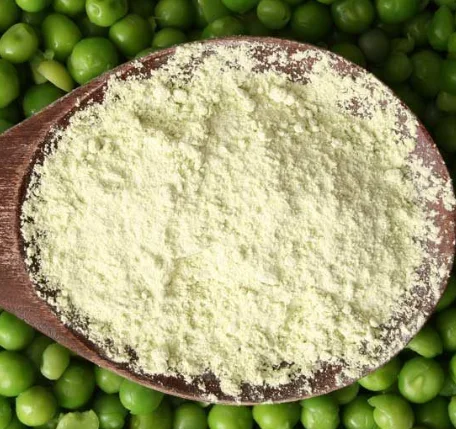
With Brainlive, the routine is one scoop stirred into water at the same time each day. Consistency matters more than any single serving, because prebiotic fiber works by steadily nurturing the microbiome rather than by delivering a same-day effect. Compare the packages and pricing if you would rather keep a multi-month supply on hand.

Who should be cautious with resistant starch?
Resistant starch is a food ingredient, not a medicine, but a few groups should check with a doctor first. If you have a diagnosed digestive condition such as IBS or a FODMAP sensitivity, fermentable fibers can worsen symptoms for some people and should be introduced carefully. Speak with your healthcare provider if you are pregnant or nursing, under 18, take any medication, or have an ongoing medical condition.
Frequently asked questions
What is resistant starch, and why is it a prebiotic?
Resistant starch is a type of starch that resists digestion in the small intestine and passes intact to the large intestine, where gut bacteria ferment it. Because it feeds beneficial bacteria rather than the body directly, it is classified as a prebiotic fiber.
How is pea starch different from ordinary starch?
Ordinary starch is broken down into glucose in the small intestine and absorbed for energy. The resistant fraction of pea starch escapes that digestion and travels to the lower gut, where it acts as food for beneficial microbes instead of being absorbed as sugar.
Why did Brainlive choose pea starch as its lead prebiotic fiber?
Pea starch is a plant-based, allergen-friendly source of resistant starch that mixes cleanly into a daily powder and delivers fiber to the lower gut. Brainlive uses it as a lead fiber to support the beneficial bacteria involved in the gut-brain axis. It is not a treatment for any condition.
Does resistant starch help the brain directly?
Not directly. Resistant starch feeds gut bacteria that produce short-chain fatty acids, and the gut-brain axis is the pathway researchers are studying for how that activity may relate to whole-body and mood wellness. The evidence is promising but still developing, and results vary.
How much resistant starch should I take, and can it cause bloating?
Many studies use roughly 15 to 30 grams of fiber a day from all sources. Because fermentation produces gas, adding resistant starch gradually and drinking water helps the gut adjust and reduces temporary bloating. Follow the Brainlive label and start slowly.
Is resistant starch the same as dietary fiber?
Resistant starch is one category within dietary fiber. All resistant starch behaves like fiber, but not all fiber is resistant starch; soluble fibers, insoluble fibers and resistant starches each behave a little differently in the gut.
Check today’s Brainlive pricing →
Brainlive is a dietary supplement, not a treatment for any medical condition. These statements have not been evaluated by the Food and Drug Administration. This product is not intended to diagnose, treat, cure or prevent any disease. Always consult a qualified healthcare professional about your individual needs.
References & further reading
- National Center for Complementary and Integrative Health (NCCIH). Probiotics: What You Need To Know. nccih.nih.gov/health/probiotics-what-you-need-to-know
- Higgins JA. Resistant starch: metabolic effects and potential health benefits. Journal of AOAC International, 2004. pubmed.ncbi.nlm.nih.gov/15287677
- Examine.com. Fiber — evidence-based overview. examine.com/supplements/fiber
- Mayo Clinic. Dietary fiber: Essential for a healthy diet. mayoclinic.org/…/fiber/art-20043983
- Baxter NT, Schmidt AW, Venkataraman A, et al. Dynamics of human gut microbiota and short-chain fatty acids in response to dietary interventions with three fermentable fibers. mBio, 2019. pubmed.ncbi.nlm.nih.gov/30696735
- Slavin J. Fiber and prebiotics: mechanisms and health benefits. Nutrients, 2013. pubmed.ncbi.nlm.nih.gov/23609775
These references describe resistant starch and prebiotic fiber in general terms and do not constitute evidence that any product treats, cures or prevents any condition.
Keep reading: the gut-brain axis explained · the best foods for brain health and memory · the Brainlive review · back to the Brainlive blog.