Do brain health supplements really work? A Brainlive claim-check

Updated September 2026 · reviewed by the Brainlive Research Team. We are an independent information resource, not a medical provider; this article is educational, not medical advice.
Brain health supplements are dietary products that combine nutrients — often fibers, plant compounds, vitamins or fatty acids — marketed to support memory, focus and everyday mental clarity in already-healthy adults. Do they really work? The honest answer is a qualified yes-and-no: a few ingredients have real evidence for general wellbeing, many bottles promise far more than the science supports, and no supplement outperforms consistent sleep, movement and nutrition.
The honest verdict on whether brain supplements deliver.
- The honest verdict
- Well-formulated supplements can offer modest, supportive benefits for a healthy mind — but they are not a cure, and the effect is smaller than the marketing implies.
- Where evidence is real
- Correcting a genuine deficiency (like B12 or omega-3) helps most; beyond that, prebiotic fibers and a few studied compounds show early promise.
- Where claims outrun science
- Overnight “genius” effects, guaranteed IQ gains and disease reversal are not supported by the evidence — be skeptical of any product that promises them.
- What matters most
- Consistency and lifestyle. A nutrient taken daily for months alongside good habits is where any support shows up — not a single scoop.
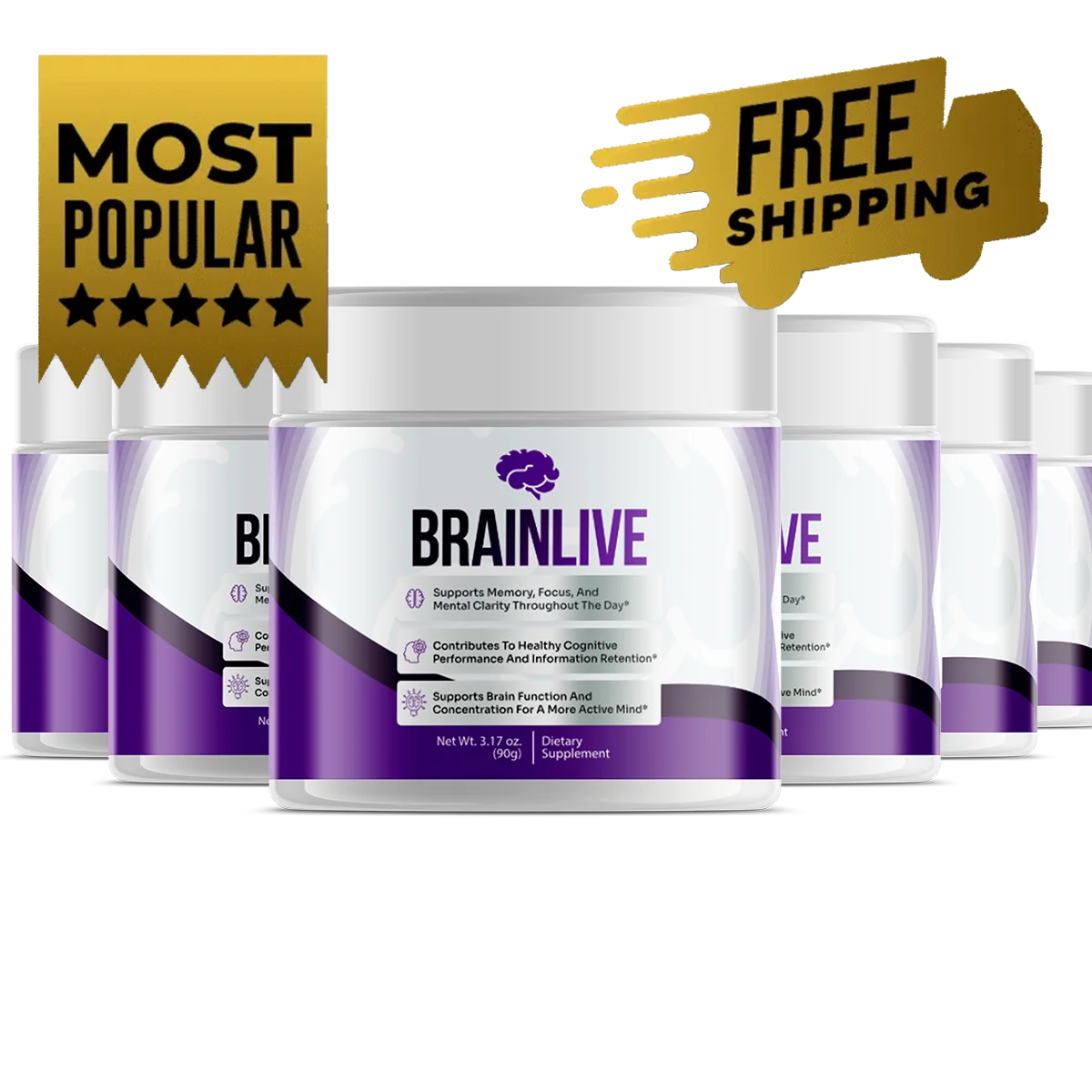
Walk down any wellness aisle and you meet bottles promising a sharper, younger brain. Some promises are grounded in nutrition science; many are wishful marketing. This guide separates the two, sets realistic expectations, and shows how a formula like Brainlive talks about its own benefits — carefully, and without disease claims.
What are brain health supplements, really?
A brain health supplement is a dietary product — a capsule, powder or gummy — that packages nutrients thought to support normal cognitive function, without being a drug or a treatment for any condition. Under U.S. law, supplements are regulated as foods, not medicines, so they are not tested and approved the way prescription drugs are, and cannot legally claim to treat or cure disease. That reframes the category: the right question is not “will this fix my brain?” but “can this add sensible nutritional support on top of the habits that do the heavy lifting?” Common ingredients range from omega-3s and B vitamins to prebiotic fibers and studied compounds like spermidine. If that is the part you came for, read how the best brain supplements compare next.
Do brain supplements actually work? What the evidence says
Whether a brain supplement “works” depends on what you expect and what is inside the bottle. The evidence is not one verdict but a spectrum — strong for a few uses, promising but early for others, and thin for the boldest claims. Sorting a product onto that spectrum is the most useful thing a buyer can do. The clearest cautionary example is Ginkgo biloba, which failed to prevent Alzheimer’s disease over five years in the large GuidAge trial reported by Vellas et al., The Lancet Neurology, 2012. There is more on this in our companion piece on whether vitamins for memory work.
Where is the evidence strongest?
The clearest, best-documented benefit of any nutrient is correcting a real deficiency. If you are genuinely low in vitamin B12, iron, or omega-3 fatty acids, restoring them can meaningfully improve how you feel and think, because your body was missing something it needs. This is why a blood test is worth more than a marketing page: supplementing a nutrient you already have plenty of rarely adds much. Omega-3s have a reasonable body of research for general brain and heart wellness, and B vitamins matter for normal nervous-system function. A systematic review and meta-analysis by Northey et al., British Journal of Sports Medicine, 2018 found that exercise interventions improved cognitive function in adults older than 50.
Where do the claims outrun the science?
Between deficiency-correction and outright hype sits a large middle ground of ingredients with early, promising, but not conclusive evidence — prebiotic fibers feeding the gut-brain axis, spermidine studied for cellular renewal, and various botanicals. These are legitimately interesting, and where careful formulas focus, but the honest framing is “studied for general wellbeing,” not “proven to boost your brain.” Then there is the marketing edge: promises of overnight genius, guaranteed memory scores, or reversing decline. Those claims are not supported by the evidence, and any product that makes them has told you something about its trustworthiness. A larger twelve-month randomised trial by Schwarz et al., JAMA Network Open, 2022 then found no significant benefit for memory, and that is the more cautious result to carry forward.
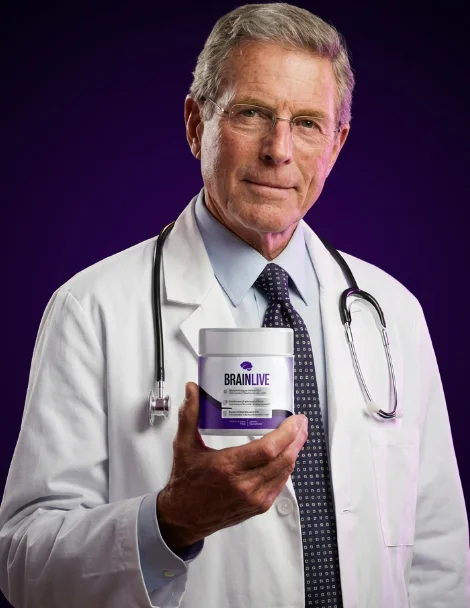
Why do consistency and lifestyle matter more than the pill?
The biggest levers for a clear, steady mind are not in any bottle — they are sleep, movement, hydration and whole-food nutrition, and a supplement can only build on top of them. A consistent seven-to-nine-hour sleep schedule consolidates memory, aerobic activity increases blood flow to the brain, and a fiber-rich diet supports the gut-brain axis; against those foundations, the effect of a supplement is real but modest. Timing matters too. A nutrient taken for a week does almost nothing measurable; the same nutrient taken daily for three months, while you also sleep and move well, is where gradual support can appear. Anyone selling instant results is skipping the part that actually works.
See the exact once-daily dose in Brainlive →
What does realistic support actually look like?
Realistic support means small, gradual, cumulative help layered on good habits — not a dramatic before-and-after. Setting that expectation before you buy is the best protection against disappointment. The table below contrasts the promises that should raise a red flag with the honest version of what a good supplement can offer.
| The hype says… | The realistic version is… |
|---|---|
| “Feel a genius-level boost in 30 minutes.” | Gut- and nutrition-focused nutrients build support over weeks to months, not minutes. |
| “Guaranteed to sharpen memory for everyone.” | Results vary; some people notice steadier focus, others little change. |
| “Reverses decline and beats brain fog for good.” | No supplement treats or reverses disease; habits address most everyday fog. |
| “Works on its own — no lifestyle changes needed.” | Works best as one input alongside sleep, movement and diet. |
| “Doctor-proven miracle ingredient.” | Ingredients are studied for general or traditional use, not proven cures. |
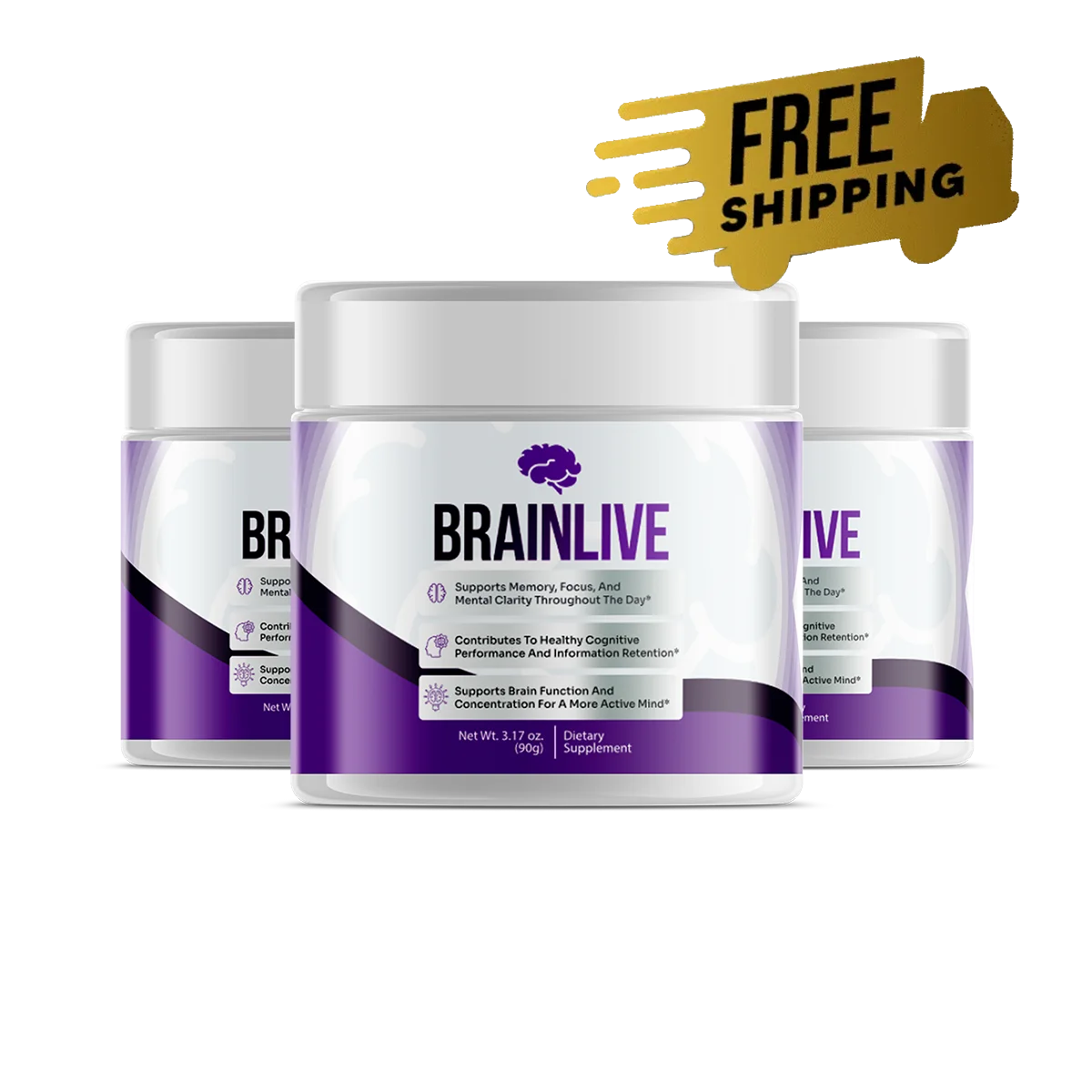
Support that fits a realistic routine
Brainlive is a once-daily scoop pairing prebiotic fibers with L-arabinose and spermidine, made to be taken consistently over months — the way nutrition-focused support actually helps. Bundles cut the per-tub price, with free U.S. shipping and a 60-day guarantee.
Check today's Brainlive pricing →How does Brainlive frame its own benefits?
Brainlive describes itself as everyday nutritional support for brain, memory and focus in already-healthy adults — and it does not claim to diagnose, treat, cure or prevent any disease. That careful, non-disease framing is what a trustworthy supplement should sound like. Rather than promising a fixed outcome, it presents each ingredient in terms of general or traditional use, invites you to pair it with good habits, and backs the purchase with a money-back window. The table below shows how that language maps onto the ingredients.
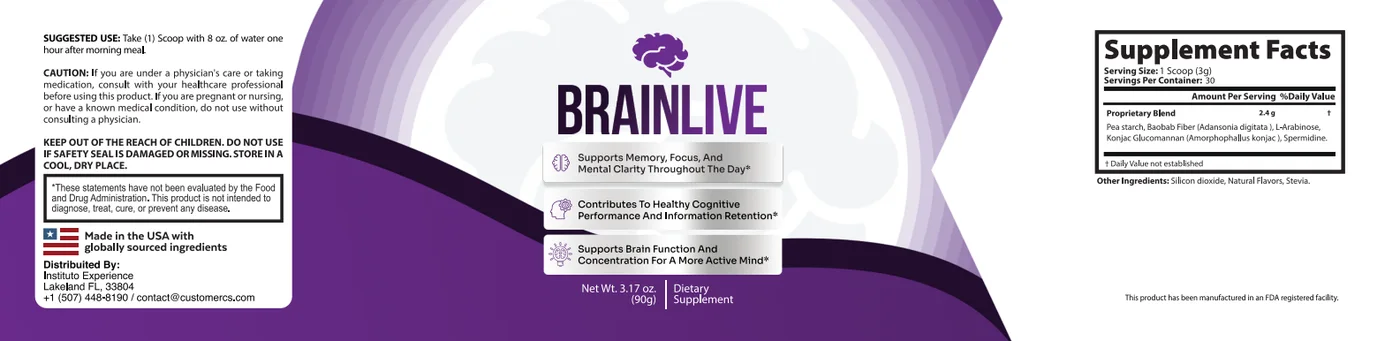
| Ingredient | What it is | How Brainlive frames it (non-disease) |
|---|---|---|
| Pea starch | Resistant starch | A prebiotic fiber that feeds beneficial gut bacteria in the gut-brain axis. |
| Baobab fiber | Fruit fiber | A traditional African food naturally rich in soluble prebiotic fiber. |
| Konjac glucomannan | Soluble fiber | A widely studied prebiotic and satiety fiber, long used as a food. |
| L-arabinose | Plant sugar | Studied for how the body handles dietary carbohydrates and steadier energy. |
| Spermidine | Polyamine | Found in foods like wheat germ; studied for autophagy, the body's cellular renewal. |
For the mechanism, read our explainer on the gut-brain axis, or see the best foods for brain health and memory. The full panel is on the Brainlive ingredients section.
How can you judge a brain supplement before you buy?
The best way to judge a brain supplement is to check its claims, transparency and dosing before you check its price. A few minutes of scrutiny filters out most of the category’s weakest products. Use this checklist:
- Does it avoid disease claims? Honest labels talk about support and general wellness, not curing or reversing conditions.
- Are ingredients and doses disclosed? A clear panel beats a hidden “proprietary blend.”
- Is the evidence framed honestly? Look for “studied for” and “traditionally used,” not “clinically proven to boost.”
- Does it expect consistency? Formulas built for daily, multi-week use are more credible than instant-miracle pitches.
- Is there a guarantee? A real money-back window shifts the risk away from you.
- Would your doctor recognize it? If you take medication or have a condition, that conversation matters most.
When should you talk to a doctor instead?
A supplement is for supporting an already-healthy mind; it is never a substitute for medical care. Speak with your doctor before starting anything if you are pregnant or nursing, under 18, taking any medication, or managing a diagnosed condition — and see them promptly if you notice persistent or worsening memory loss, confusion, or mood changes. Those are signals to be evaluated, not self-treated with a bottle from a shelf. Used sensibly, a well-formulated supplement is a small, optional layer of support — nothing it should pretend to be.
Frequently asked questions
Do brain health supplements really work?
For an already-healthy adult, well-formulated supplements can offer modest, supportive benefits — but they are not a cure, and the effect is smaller than good sleep, movement and nutrition. The honest answer is that some ingredients have real evidence for general wellness, many marketing claims outrun the science, and results vary from person to person.
What is the strongest evidence for brain supplements?
The clearest benefit is correcting an actual deficiency — for example, B12 or omega-3 in people who are short of them. Beyond deficiency, prebiotic fibers for gut health and a handful of studied compounds show promise for general wellbeing, but the evidence is early and the effects are gradual rather than dramatic.
Why do lifestyle and consistency matter more than the pill?
Sleep, exercise, hydration and whole-food nutrition are the biggest levers for a clear mind, and they are the foundation a supplement can only build on. A daily nutrient taken for a week does little; the same nutrient taken consistently for months alongside good habits is where any support shows up.
How long should I try a brain supplement before judging it?
Gut- and nutrition-focused formulas work gradually, so most people give a supplement at least eight to twelve weeks of daily use before deciding. Brainlive is designed to be taken once daily over several months, and individual results vary.
How does Brainlive describe its own benefits?
Brainlive frames itself as everyday support for brain, memory and focus in already-healthy adults, built on prebiotic fibers and spermidine. It does not claim to diagnose, treat, cure or prevent any disease, and it presents its ingredients in terms of general and traditional use rather than medical outcomes.
Are brain supplements safe to take?
Most fiber- and food-derived nutrients are well tolerated by healthy adults, but supplements are not risk-free — they can interact with medication or existing conditions. Talk to your doctor before starting anything if you are pregnant or nursing, under 18, taking medication, or managing a diagnosed condition.
Try Brainlive risk-free for 60 days →
Brainlive is a dietary supplement, not a treatment for any medical condition. These statements have not been evaluated by the Food and Drug Administration. This product is not intended to diagnose, treat, cure or prevent any disease. Always consult a qualified healthcare professional about your individual needs.
References & further reading
- National Center for Complementary and Integrative Health (NCCIH). Dietary and Herbal Supplements. nccih.nih.gov/health/dietary-and-herbal-supplements
- National Institutes of Health, National Institute on Aging. Cognitive Health and Older Adults. nia.nih.gov/health/cognitive-health-and-older-adults
- NIH Office of Dietary Supplements. Omega-3 Fatty Acids — Fact Sheet for Consumers. ods.od.nih.gov/factsheets/Omega3FattyAcids-Consumer
- Mayo Clinic. Memory loss: When to seek help. mayoclinic.org/memory-loss
- Examine.com. Spermidine — evidence-based summary. examine.com/supplements/spermidine
- Wirth M, Benson G, Schwarz C, et al. The effect of spermidine on memory performance in older adults at risk for dementia: a randomized controlled trial. Cortex, 2018. pubmed.ncbi.nlm.nih.gov/30388439
- Vellas B, Coley N, Ousset PJ, et al. Long-term use of standardised Ginkgo biloba extract for the prevention of Alzheimer’s disease (GuidAge): a randomised placebo-controlled trial. The Lancet Neurology, 2012. pubmed.ncbi.nlm.nih.gov/22959217
- Northey JM, Cherbuin N, Pumpa KL, Smee DJ, Rattray B. Exercise interventions for cognitive function in adults older than 50: a systematic review with meta-analysis. British Journal of Sports Medicine, 2018. pubmed.ncbi.nlm.nih.gov/28438770
- Schwarz C, Benson GS, Horn N, et al. Effects of spermidine supplementation on cognition and biomarkers in older adults with subjective cognitive decline: a randomized clinical trial. JAMA Network Open, 2022. pubmed.ncbi.nlm.nih.gov/35616942
These references describe the ingredients in general terms and are not evidence that any product treats, cures or prevents any condition.
Keep reading: improve memory and focus naturally · the gut-brain axis explained · the full Brainlive review · the Brainlive blog.