Do vitamins for memory work? A Brainlive 2026 fact-check

Updated September 2026 · fact-checked by the Brainlive Research Team. We are an independent information resource, not a medical provider, and this article is educational rather than medical advice.
Vitamins for memory work best as insurance, not as an upgrade: correcting a real shortfall in B12, folate or vitamin D can lift the fog it caused, but for a well-nourished adult there is little evidence that extra memory vitamins sharpen recall beyond normal. This fact-check separates the nutrients with genuine support from the marketing, and shows why Brainlive takes a fiber-and-spermidine route rather than a plain vitamin pill.
Do memory vitamins work? The honest, evidence-led version.
- Short answer
- They help when you are deficient, and mostly do not when you are not. Fixing a genuine B12, folate or vitamin D shortfall can restore clarity; topping up on normal levels has little proven benefit.
- Best supported
- B12, folate (B9) and B6 have the clearest link to memory because a deficiency causes symptoms; vitamin D and omega-3 are heavily studied but less conclusive.
- Overstated
- Claims that any pill reverses memory loss or prevents dementia run well ahead of the science.
- Where Brainlive fits
- It is a gut-first powder, not a vitamin megadose — it feeds the gut-brain axis with prebiotic fibers and spermidine, and is not a treatment for any disease.

Any pharmacy aisle offers shelves of “brain” and “memory” formulas promising sharper recall, on the intuitive pitch that the brain needs nutrients, so more should mean a better brain. This guide fact-checks the popular memory vitamins, flags where marketing gets ahead of the data, and shows how a formula like Brainlive approaches the problem differently.
What does “vitamins for memory” actually mean?
“Vitamins for memory” is a marketing umbrella for the nutrients your brain genuinely needs to run — chiefly the B vitamins, vitamin D and the omega-3 fats — sold on the promise that extra amounts improve recall. The important distinction is between need and surplus: your brain requires these nutrients, and running low can dull thinking, but once your levels are normal, more is not automatically better. That single idea — deficiency versus sufficiency — explains why some people feel a difference and most feel none.
Why does the deficiency-versus-sufficiency line matter so much?
When a nutrient is missing, correcting the gap can produce a real improvement — which is why headlines about a vitamin “improving memory” often come from studies of deficient or elderly groups. If you are already well nourished, topping up does little, and knowing which side of that line you sit on takes a blood test, not a guess.
Do B vitamins really help brain and memory?
B vitamins are essential for normal brain function, and correcting a deficiency in B12, folate or B6 can genuinely restore clarity — but taking extra when your levels are already normal has not been shown to boost memory in healthy adults. B12 and folate (B9) help make nerve cells and keep homocysteine, an amino acid linked to vascular and cognitive concerns, in check. A shortfall — common in older adults, vegetarians and people on certain medications — can show up as fatigue, low mood and poor recall that improve once levels are restored. In people with raised homocysteine, B-vitamin treatment slowed atrophy in the brain regions most affected in Alzheimer’s disease in a trial reported by Douaud et al., PNAS, 2013.
So should healthy people take a B-complex for memory?
This is where enthusiasm outruns data. Large trials that gave B vitamins to lower homocysteine reduced that marker, but not reliably memory in well-nourished participants. If you are low, fixing it helps; if you are not, a B-complex is unlikely to sharpen a normal memory — insurance for those at risk of deficiency, not a proven enhancer for everyone else.

Which memory nutrients have the strongest evidence?
The nutrients most often sold for memory fall on a spectrum from “clear role when deficient” to “popular but thin.” The table below shows where each stands, so you can weigh a label against the science. A randomised trial of docosahexaenoic acid in age-related cognitive decline was reported by Yurko-Mauro et al., Alzheimer’s & Dementia, 2010.
| Nutrient | What the evidence supports | Strength of evidence |
|---|---|---|
| Vitamin B12 | Corrects fog and poor recall caused by genuine deficiency; no proven benefit at normal levels. | Strong for deficiency |
| Folate (B9) | Works with B12 on nerve maintenance and homocysteine; matters most when intake is low. | Moderate |
| Vitamin D | Widely associated with cognition in observational data; supplement trials are mixed. | Mixed |
| Omega-3 (DHA/EPA) | Structural fat in the brain; some support in low-intake or older groups, inconsistent otherwise. | Mixed |
| Vitamin E | Antioxidant marketed for memory; large trials show little benefit in healthy people. | Weak |
| Megadose “brain” blends | Many nutrients at high doses; rarely tested as sold. | Weak / untested |
The pattern is consistent: the strongest cases are about fixing a gap, not adding surplus — the opposite of how most memory-vitamin bottles are advertised. For habits that matter more than any single nutrient, see improving memory and focus naturally.
See what is in every Brainlive scoop →
Where do memory-vitamin claims outrun the evidence?
The biggest gap between marketing and science is the leap from “essential for the brain” to “boosts, restores or protects memory.” A nutrient can be necessary and still do nothing extra once you have enough. Three claims deserve scepticism. The clearest cautionary example is Ginkgo biloba, which failed to prevent Alzheimer’s disease over five years in the large GuidAge trial reported by Vellas et al., The Lancet Neurology, 2012.
“Reverses memory loss” and “prevents dementia”
No vitamin or supplement has been proven to prevent, treat or cure dementia or Alzheimer’s disease. Correcting a real deficiency supports normal function, but that is a world away from halting a disease process, and health agencies are explicit that the prevention evidence is not there. Any product implying otherwise makes a claim the science cannot back.
“Clinically proven” megadose blends
Many “brain” formulas stack a dozen nutrients at high doses and borrow “clinically proven” language from single-ingredient studies that were never run on the blend itself. More ingredients at bigger numbers is a marketing signal, not a scientific one, and a few — fat-soluble vitamin E, high-dose B6 — carry real downsides in excess.
“More is better”
Water-soluble vitamins in surplus are mostly excreted; fat-soluble ones can accumulate. Doubling a dose you did not need does not double a benefit that was not there.
How is Brainlive different from a memory vitamin pill?
Brainlive is not a vitamin megadose — it is a once-daily powder built on prebiotic fibers, L-arabinose and spermidine that feeds the gut-brain axis, a different mechanism from isolated vitamins. Rather than push more of a nutrient your brain may already have enough of, it works upstream, on the gut ecosystem understood to talk to the brain — a modest, habit-supporting role, not a treatment for any condition.
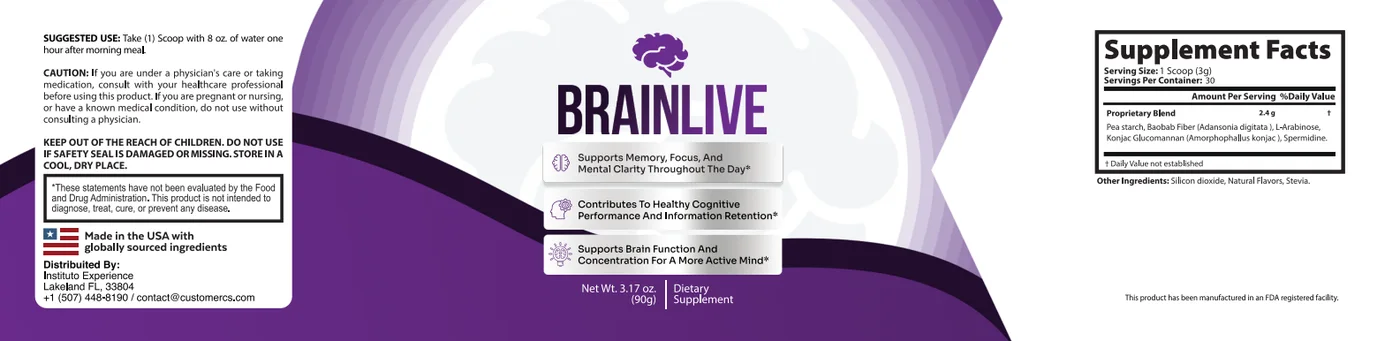
What is actually inside, and why fiber over vitamins?
The formula pairs resistant starches and soluble fibers — pea starch, baobab and konjac glucomannan — with L-arabinose and spermidine, a polyamine studied for its role in autophagy. The logic: most people get too little fiber rather than too little vitamin. For the mechanism in depth, read the gut-brain axis explained, or the full ingredients breakdown.
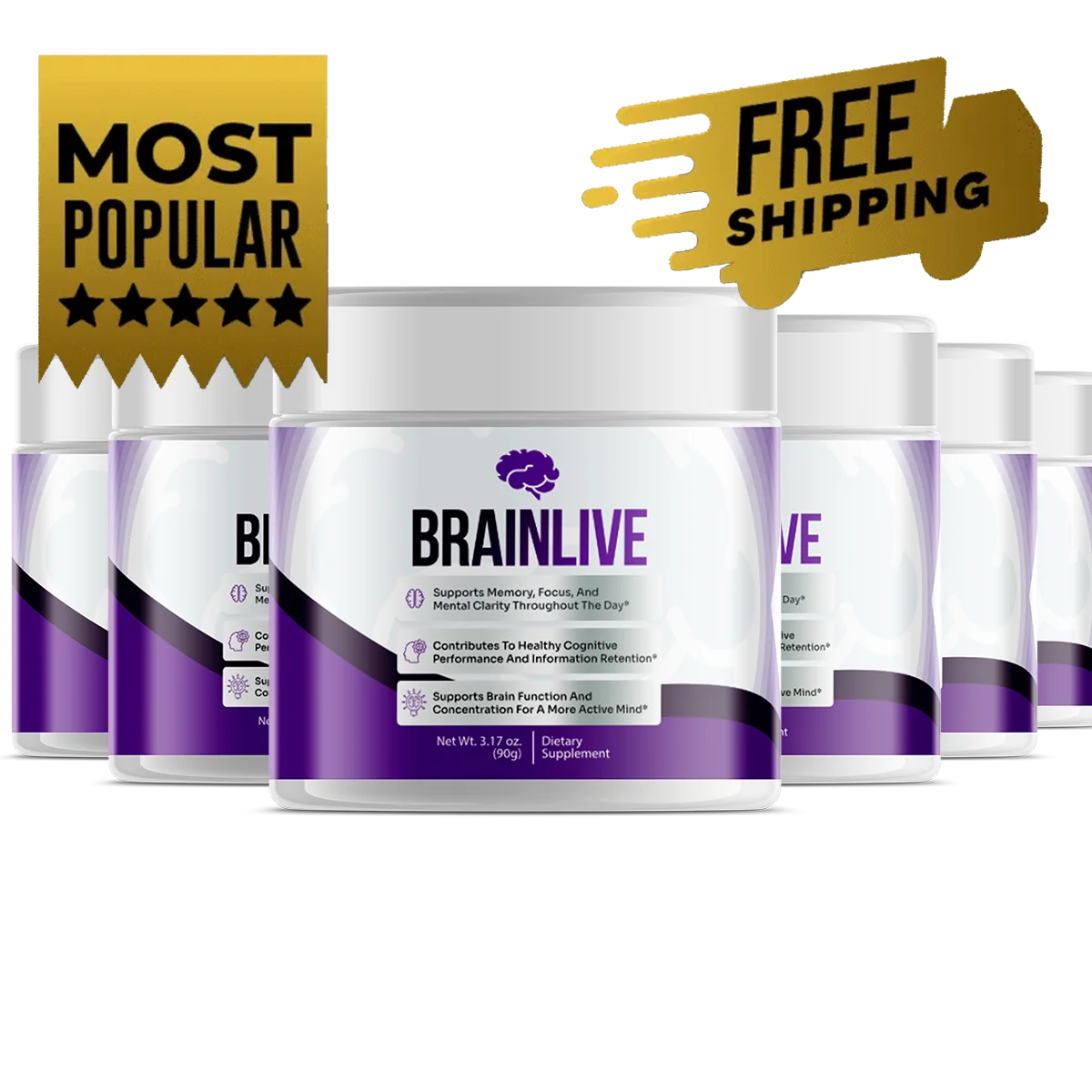
Prefer a gut-first approach to a vitamin shelf?
Brainlive is a once-daily scoop pairing prebiotic fibers with L-arabinose and spermidine — no megadoses. The six-tub bundle is best value at $49 per tub, with free U.S. shipping and a 60-day guarantee.
Check today’s Brainlive pricing — from $49/tubHow should you choose a memory supplement in 2026?
The smartest first move is not buying a supplement — it is finding out whether you are short of anything, so you supplement what you lack instead of guessing. This table sorts the common paths by who they suit.
| If you... | Sensible step | Watch out for |
|---|---|---|
| Feel foggy and eat few animal foods | Ask for a B12 and folate blood test | Guessing; symptoms overlap with sleep and stress |
| Get little sun or are older | Check vitamin D; supplement if low | Megadoses; more is not better |
| Are already well nourished | Prioritise sleep, movement and fiber first | “Brain blend” megadoses that promise recall gains |
| Want gut-first daily support | Try a prebiotic-fiber formula like Brainlive | Treating any supplement as a cure or medicine |
Whichever row fits, the same rule applies: a supplement supports a healthy routine, it does not replace one, and is never a treatment for a medical condition. See brain powder vs pills, or whether brain food supplements work.
When should you talk to a doctor?
Persistent memory problems are a medical question, not a supplement question. Speak with your doctor before starting any new vitamin, and especially if you are pregnant or nursing, under 18, take medication, have a diagnosed condition, or notice memory loss, confusion or mood changes that are new or worsening. A simple blood test can reveal whether a genuine deficiency — the one scenario where memory vitamins clearly help — is behind how you feel.
Frequently asked questions
Do vitamins for memory actually work?
Vitamins reliably help memory only when you are low in one to begin with — correcting a B12, folate or vitamin D shortfall can restore clarity. For a well-nourished adult, extra memory vitamins have not been shown to sharpen recall, and results vary.
What is the best vitamin for memory?
There is no single best vitamin for memory. B12, folate (B9) and B6 have the clearest role because deficiency causes cognitive symptoms, and vitamin D and omega-3 are widely studied. None is a treatment for memory loss.
Do B vitamins improve brain function?
B vitamins are essential for normal brain function, and a deficiency can cause fog, fatigue and poor recall that improve once corrected. Taking extra B vitamins when your levels are already normal has not been shown to boost memory in healthy adults.
How is Brainlive different from a memory vitamin pill?
Brainlive is not a vitamin megadose. It is a once-daily powder built on prebiotic fibers, L-arabinose and spermidine that feeds the gut-brain axis, a different mechanism from swallowing isolated vitamins. It supports healthy habits and is not a treatment for any condition.
Can memory vitamins prevent dementia or Alzheimer’s?
No. No vitamin or supplement has been proven to prevent, treat or cure dementia or Alzheimer’s disease. Correcting a genuine deficiency supports normal function, but that is not the same as preventing disease, and claims otherwise outrun the evidence.
Should I get a blood test before buying memory vitamins?
It is a sensible first step. A simple test for B12, folate, vitamin D and iron tells you whether a shortfall is behind your fog, so you supplement what you actually lack instead of guessing. Ask your doctor before starting anything new.
Try Brainlive risk-free for 60 days →
Brainlive is a dietary supplement, not a treatment for any medical condition. These statements have not been evaluated by the Food and Drug Administration. This product is not intended to diagnose, treat, cure or prevent any disease. Always consult a qualified healthcare professional about your individual needs.
References & further reading
- National Institutes of Health, Office of Dietary Supplements. Vitamin B12 — Health Professional Fact Sheet. ods.od.nih.gov/factsheets/VitaminB12-HealthProfessional
- National Center for Complementary and Integrative Health (NCCIH). Dietary Supplements for Cognitive Function, Dementia, and Alzheimer’s Disease. nccih.nih.gov
- Mayo Clinic. Memory loss: When to seek help. mayoclinic.org/memory-loss
- National Institute on Aging (NIH). Cognitive Health and Older Adults. nia.nih.gov/health/cognitive-health-and-older-adults
- Douaud G, Refsum H, de Jager CA, et al. Preventing Alzheimer’s disease-related gray matter atrophy by B-vitamin treatment. Proceedings of the National Academy of Sciences, 2013. pubmed.ncbi.nlm.nih.gov/23690582
- Examine.com. Spermidine — evidence-based summary. examine.com/supplements/spermidine
- Yurko-Mauro K, McCarthy D, Rom D, et al. Beneficial effects of docosahexaenoic acid on cognition in age-related cognitive decline. Alzheimer’s & Dementia, 2010. pubmed.ncbi.nlm.nih.gov/20434961
- Vellas B, Coley N, Ousset PJ, et al. Long-term use of standardised Ginkgo biloba extract for the prevention of Alzheimer’s disease (GuidAge): a randomised placebo-controlled trial. The Lancet Neurology, 2012. pubmed.ncbi.nlm.nih.gov/22959217
These references describe the nutrients and habits in general terms and do not constitute evidence that any product treats, cures or prevents any condition.
Keep reading: the best foods for brain health and memory · how to improve memory and focus naturally · back to the Brainlive blog · homepage.