Do brain food supplements work? Brainlive explains the real evidence

Updated September 2026 · reviewed by the Brainlive Research Team. We are an independent information resource, not a medical provider, and this article is educational rather than medical advice.
Brain food supplements work best as everyday nutritional support for an already-healthy mind, and worst as the miracle memory cures that adverts imply. The honest picture is mixed: the evidence is real but modest, strongest when a supplement fills a genuine nutrient gap or feeds the gut-brain axis, and weakest when a product promises dramatic gains. This is a myth-check, not a sales pitch — and it explains exactly where a formula like Brainlive fits, and where it does not.
Do brain food supplements work? An honest, evidence-led verdict.
- Short answer
- Some help modestly, many do not, and none are a cure — the benefit is real but small, and heavily oversold in marketing.
- Best evidence
- Correcting a true deficiency, and feeding beneficial gut bacteria with prebiotic fibers, which sit on solid nutrition science.
- Weakest claims
- Instant recall, guaranteed IQ gains, or reversing decline in a healthy, well-fed adult — those are not supported.
- Where Brainlive fits
- As a daily prebiotic-fiber and spermidine scoop for everyday support, not as treatment for any condition.
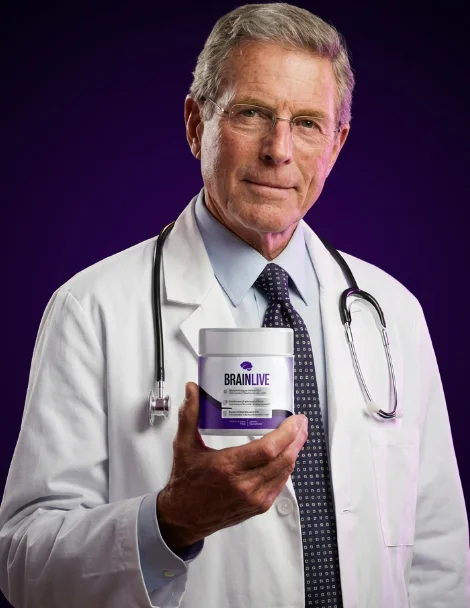
Walk down any supplement aisle and you meet a wall of promises: sharper memory, laser focus, a younger brain in a bottle. Below we separate what the science supports from marketing, look closely at Brainlive, and give you a simple way to judge any brain-food product before you buy.
What are brain food supplements, and what are brain food nutrients?
A brain food supplement is a concentrated product that delivers nutrients associated with normal brain function — the same components you would ideally get from a varied diet, packaged into a capsule, powder or drink. Brain food nutrients are the dietary building blocks most linked to a healthy mind: omega-3 fats, B vitamins, plant polyphenols, prebiotic fibers, and polyamines such as spermidine. In whole-diet studies these track with healthier ageing. The catch is that isolating a nutrient into a pill does not reliably reproduce the benefit of eating it inside real food. The practical detail sits in our guide to what nootropics actually are.
Do brain food supplements work? What the evidence actually shows
Whether brain food supplements work depends entirely on the person, the nutrient and the claim being made. For someone with a genuine shortfall — low B12, low omega-3, or a diet thin on fiber — correcting that gap can produce a real, measurable difference. For a healthy, well-fed adult hoping a pill will add IQ points, the evidence is thin. Independent reviews from the U.S. National Institutes of Health keep reaching the same conclusion: most popular memory supplements have not been shown to prevent cognitive decline in healthy people, even as gut-focused research grows more promising. A larger twelve-month randomised trial by Schwarz et al., JAMA Network Open, 2022 then found no significant benefit for memory, and that is the more cautious result to carry forward.
What can brain food supplements realistically do?
Realistically, the best brain food supplements offer nutritional insurance rather than transformation. They can fill dietary gaps, support the gut microbiome that talks to the brain, and make a healthy routine easier to keep. Prebiotic fibers, for instance, are a well-established way to feed beneficial gut bacteria, and that gut-brain conversation is one of the most active areas in nutrition science.
What can they not do?
No brain food supplement can cure, treat or prevent a disease, reverse dementia, or replace sleep, movement and a good diet. Claims of instant recall, guaranteed focus or a "younger brain" belong to marketing, not peer-reviewed science — a fast, guaranteed result is the clearest signal to be cautious. Honest products, including Brainlive, describe themselves as everyday support and point you toward the habits that do the heavy lifting.
Which brain food nutrients have the best evidence?
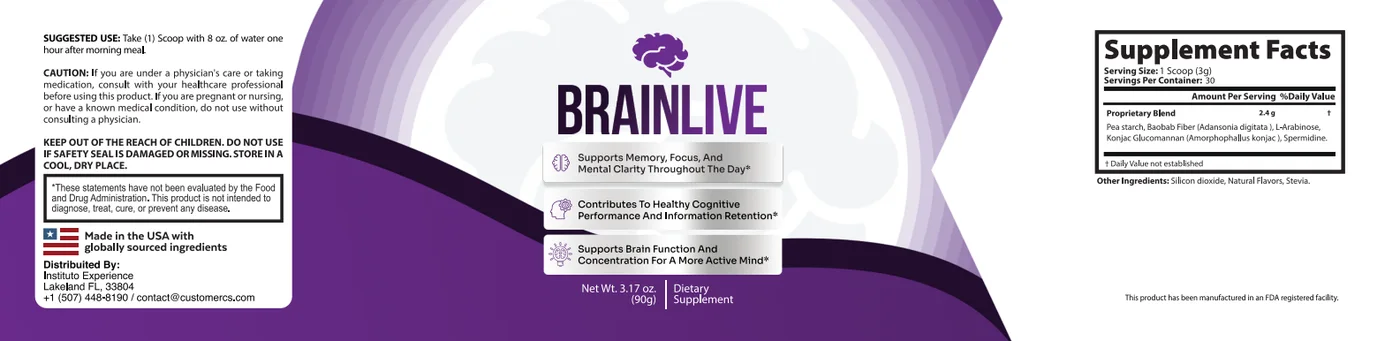
The brain food nutrients with the strongest evidence are the ones tied to mechanisms scientists already understand well, such as gut fermentation and cellular renewal. The table below grades general nutritional evidence for wellness — not proof that any nutrient treats a condition.
| Nutrient | What it is | General evidence signal |
|---|---|---|
| Prebiotic fibers | Pea starch, baobab, konjac | Strong — feeding gut bacteria is well-established science. |
| Omega-3 (DHA) | Fatty-acid | Moderate — clearest in people with low intake. |
| B vitamins | B12, folate, B6 | Moderate — meaningful when correcting a deficiency. |
| Spermidine | Polyamine | Emerging — studied for autophagy; human data early. |
| L-arabinose | Plant sugar | Emerging — studied for dietary-carbohydrate handling. |
Why do prebiotic fibers stand out?
Prebiotic fibers stand out because their mechanism is not speculative: they reach the lower gut intact, where resident bacteria ferment them into compounds the body uses. Feeding that microbiome is one of the most reproducible findings in modern nutrition, which is why fibers like pea starch, baobab and konjac form the backbone of Brainlive. It is honest to say fibers support whole-body wellness through the gut; it would be dishonest to say they treat a brain disease. In a placebo-controlled study by Schmidt et al., Psychopharmacology, 2015, three weeks of prebiotic intake lowered the waking cortisol response and shifted emotional attention in healthy volunteers.
What about spermidine and polyamines?
Spermidine is a naturally occurring polyamine studied for its role in autophagy — the cellular "housekeeping" that clears out worn components. It occurs in foods such as wheat germ and aged cheese, and early research has made it an interesting nutrient for healthy ageing. But the human evidence is still emerging, and it would be premature to claim proven cognitive benefits. Brainlive includes spermidine as everyday support while that science matures. A randomised controlled trial by Wirth et al., Cortex, 2018 reported a small signal on one memory measure in older adults at risk of dementia.
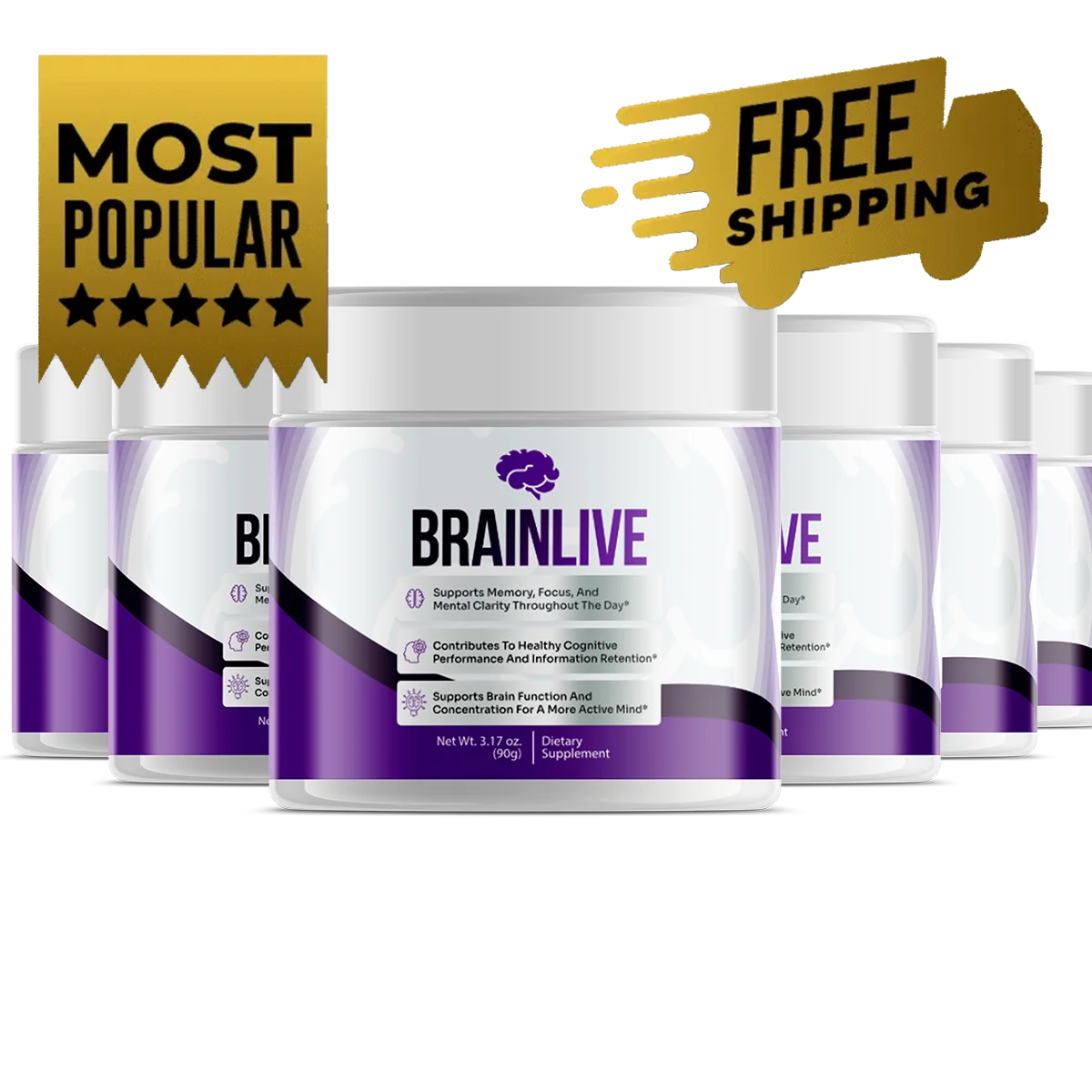
See what is in every Brainlive scoop
Brainlive is a once-daily scoop pairing prebiotic fibers with L-arabinose and spermidine — no stimulants. The six-tub bundle is the best value at $49 per tub, with free U.S. shipping and a 60-day guarantee.
Check today's Brainlive pricing — from $49/tubHow strong is the memory supplement evidence overall?
The overall memory supplement evidence is best described as promising in patterns and weak in pills. When researchers study whole dietary patterns — a fiber-rich, plant-forward, Mediterranean-style diet — the association with healthier cognitive ageing is fairly consistent. When they isolate a single nutrient and test it in already-healthy adults, the effect usually shrinks or disappears. That gap is the most important thing to understand about cognitive supplement science: the same nutrient can look impressive in a food study and unremarkable in a pill trial.
| Claim you might see | Evidence verdict | Honest takeaway |
|---|---|---|
| "Fixes a real nutrient deficiency" | Well supported | Useful — but only if you have the gap. |
| "Feeds the gut-brain axis" | Supported for wellness | Reasonable; fiber mechanism solid, brain link still growing. |
| "Supports everyday focus and clarity" | Plausible, modest | Fine alongside sleep, movement and diet. |
| "Reverses decline / boosts IQ" | Not supported | A red flag — avoid products promising this. |
| "Works within hours" | Only stimulants | Nutrition builds slowly; instant effects mean caffeine. |
Our comparison of stimulant versus stimulant-free nootropics is a useful companion read on why fast-acting products differ from gradual nutrition.
Where does Brainlive fit — everyday support, not a cure?
Brainlive fits squarely in the "everyday nutritional support" category, and it is designed to be honest about that. It is a once-daily powder built on prebiotic fibers, with L-arabinose and spermidine, taken as a habit rather than a treatment. It contains no stimulants, makes no disease claims, and will not out-perform the fundamentals — sleep, movement, hydration and a fiber-rich diet — that do most of the work. It simply makes the gut-brain step of a routine easy to keep.
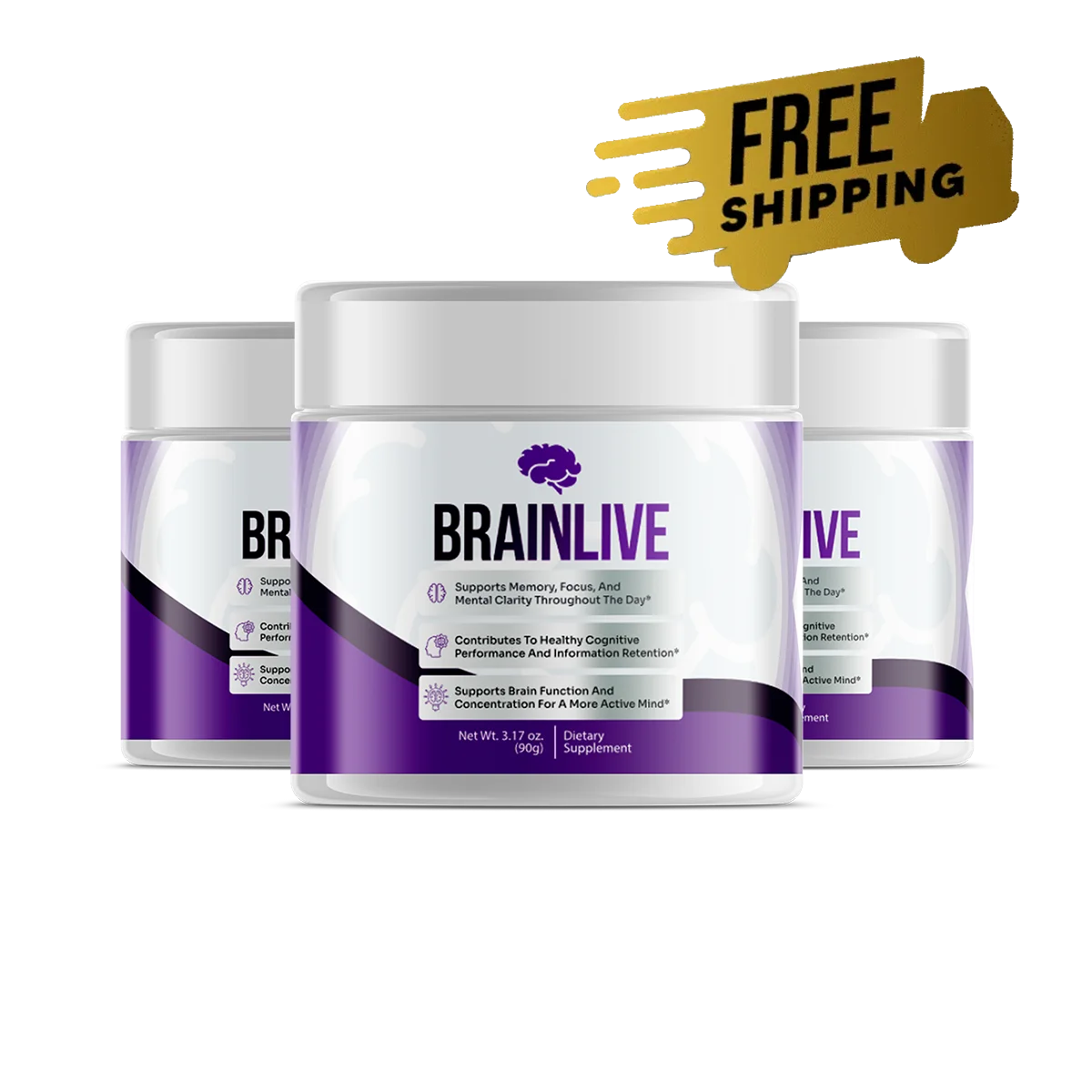
If that framing sounds modest, it is meant to — the most trustworthy brain-food products under-promise. Read our full Brainlive review for the complete ingredient breakdown and pricing.
How can you judge a brain food supplement before you buy?
The best way to judge a brain food supplement is to read the label the way a sceptic reads a headline. Run any product — Brainlive included — through this checklist:
- Check the claims. Honest products support "everyday wellness"; avoid anything promising to cure, reverse or guarantee.
- Look for real doses. A transparent label lists each ingredient and amount, not a hidden "proprietary blend."
- Match it to a gap. A supplement helps most when it fills something your diet is genuinely missing.
- Expect gradual, not instant. Nutrition builds over weeks; only stimulants act within hours.
- Keep the fundamentals first. No scoop replaces sleep, movement and whole foods.
Because these nutrients build gradually, most people choose a multi-month supply — compare the packages and pricing.
When should you talk to a doctor?
Any brain food supplement is for supporting an already-healthy mind, not for diagnosing or treating a problem. Speak with your doctor if you are pregnant or nursing, under 18, take any medication, have a diagnosed condition, or notice persistent or worsening symptoms such as significant memory loss, confusion or mood changes.
Frequently asked questions
Do brain food supplements work?
Some do, modestly, and many do not. The strongest evidence is for correcting a genuine nutrient gap and for feeding the gut-brain axis with prebiotic fibers. No brain food supplement is a cure, and marketing usually overstates the effect, so treat any product as everyday support rather than treatment.
What are brain food nutrients?
Brain food nutrients are the dietary components most linked to normal brain function — omega-3 fats, B vitamins, prebiotic fibers, polyphenols and polyamines such as spermidine. In whole diets they are consistently associated with healthier ageing, though isolating them into a pill does not guarantee the same benefit.
How strong is the memory supplement evidence?
It is mixed. Reviews from the NIH and NCCIH find little proof that popular memory pills prevent decline in healthy adults, while diet-pattern and gut-focused research is more encouraging. Evidence is strongest when a supplement fills a real deficiency, and weakest when it promises dramatic gains in an already well-fed person.
Are prebiotic fibers better evidence than typical brain pills?
For whole-body wellness, prebiotic fibers rest on a large and growing body of nutrition science, because feeding beneficial gut bacteria is well established. That is different from claiming they treat a brain condition, which no fiber does. Brainlive uses fibers as everyday support, not as medicine.
How long before a brain food supplement might help?
Nutrition and gut-focused nutrients tend to build gradually, over several weeks to a few months of daily use, rather than working within hours like a stimulant. Brainlive is designed as a daily habit, and individual results vary.
Is Brainlive a treatment for memory loss?
No. Brainlive is a dietary supplement for everyday brain, memory and focus support, not a treatment, cure or preventive for any disease. If you have significant or worsening memory problems, see a qualified healthcare professional.
The honest verdict: brain food supplements are support, not a cure — and Brainlive is built to be exactly that, a once-daily prebiotic-fiber scoop with a 60-day guarantee.
Try Brainlive risk-free for 60 days →Brainlive is a dietary supplement, not a treatment for any medical condition. These statements have not been evaluated by the Food and Drug Administration. This product is not intended to diagnose, treat, cure or prevent any disease. Always consult a qualified healthcare professional about your individual needs.
References & further reading
- National Center for Complementary and Integrative Health (NCCIH). Dietary and Herbal Supplements. nccih.nih.gov/health/dietary-and-herbal-supplements
- NIH, National Institute on Aging. Cognitive Health and Older Adults. nia.nih.gov/health/cognitive-health-and-older-adults
- Schmidt K, Cowen PJ, Harmer CJ, et al. Prebiotic intake reduces the waking cortisol response and alters emotional bias in healthy volunteers. Psychopharmacology, 2015. pubmed.ncbi.nlm.nih.gov/25449699
- Examine.com. Spermidine — evidence-based summary. examine.com/supplements/spermidine
- Mayo Clinic. Memory loss: 7 tips to improve your memory. mayoclinic.org/healthy-lifestyle/healthy-aging/in-depth/memory-loss
- Schwarz C, Benson GS, Horn N, et al. Effects of spermidine supplementation on cognition and biomarkers in older adults with subjective cognitive decline: a randomized clinical trial. JAMA Network Open, 2022. pubmed.ncbi.nlm.nih.gov/35616942
- Wirth M, Benson G, Schwarz C, et al. The effect of spermidine on memory performance in older adults at risk for dementia: a randomized controlled trial. Cortex, 2018. pubmed.ncbi.nlm.nih.gov/30388439
These references describe the ingredients and habits in general terms and do not constitute evidence that any product treats, cures or prevents any condition.
Keep reading: the best foods for brain health and memory · how to improve memory and focus naturally · back to the Brainlive blog · homepage.