Konjac glucomannan fiber: how it works in Brainlive

Updated September 2026 · reviewed by the Brainlive Research Team. We are an independent information resource, not a medical provider, and this article is educational rather than medical advice. What formally counts as a prebiotic at all was settled in a consensus statement by Gibson et al., Nature Reviews Gastroenterology & Hepatology, 2017.
Konjac glucomannan fiber is a soluble, highly water-absorbent dietary fiber extracted from the tuber of the konjac plant, long eaten as a food across East Asia and studied for its role in satiety and gut health. Inside Brainlive, it works as one strand of a multi-fiber prebiotic blend that feeds the gut bacteria involved in the gut-brain conversation — a food-based support, not a treatment for any condition.
What konjac glucomannan is and why it sits in Brainlive's fiber blend.
- What it is
- A soluble fiber from the konjac root that swells into a thick gel in water — one of the most studied satiety and prebiotic fibers.
- Food heritage
- Centuries of use in East Asia as konnyaku jelly and shirataki noodles, so it comes to the supplement world as a food first.
- How it helps
- It feeds beneficial gut bacteria (prebiotic action) and slows digestion for a fuller, steadier feeling (satiety).
- In Brainlive
- Used as one fiber among several, at the dose printed on the Supplement Facts panel, to nourish the gut side of the gut-brain axis.
- Honest limit
- It is a dietary fiber for everyday wellness, not a drug, and it does not diagnose, treat or cure any disease.
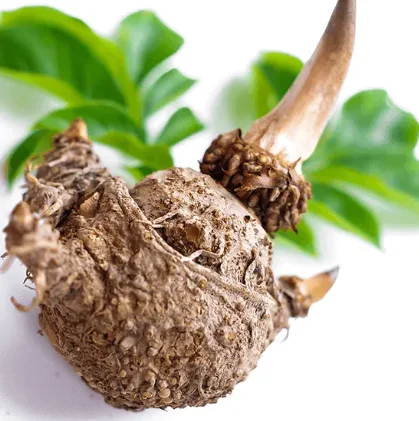
If you have ever eaten translucent shirataki noodles or wobbly konnyaku jelly, you have already met konjac glucomannan. It is one of the most water-hungry fibers in the human diet, and that single property explains almost everything it does — from the fullness it creates to the way it feeds the microbes in your lower gut. This guide covers where it comes from, how it works, what the evidence does and does not say, and the job it holds inside Brainlive.
What is konjac glucomannan fiber, exactly?
Konjac glucomannan is a soluble dietary fiber made of long chains of two sugar units — glucose and mannose — extracted from the underground tuber of Amorphophallus konjac. Unlike the insoluble fiber in wheat bran, glucomannan dissolves and disperses in water, and it is exceptionally viscous: gram for gram it absorbs more water than almost any other food fiber, swelling into a soft gel. Because our digestive enzymes cannot break those glucose-mannose chains, the fiber travels intact through the stomach and small intestine and arrives in the colon largely undigested, where it becomes food for bacteria instead. That combination — indigestible to us, fermentable by our microbes, and highly gel-forming — is what makes it interesting to nutrition researchers.
Where does konjac root fiber come from?
Konjac root fiber comes from a flowering plant native to East and Southeast Asia, where its starchy corm has been eaten for well over a thousand years. In Japan the corm is processed into konnyaku, a firm, low-calorie jelly, and into shirataki, the thin translucent noodles common in hot pots. This deep food history matters because it means glucomannan enters the modern supplement conversation with a long record of ordinary dietary use, prized as much for texture and fullness as for any single physiological effect.

How does glucomannan work as a soluble fiber?
Glucomannan works by absorbing water and forming a thick, slow-moving gel that changes the pace of digestion. The mechanism is physical before it is chemical, and it unfolds in a few overlapping steps. Glucomannan has been pooled across human trials in a systematic review and meta-analysis by Sood et al., American Journal of Clinical Nutrition, 2008.
Why does it form such a thick gel?
The gel forms because the branched glucose-mannose chains trap water between them, and konjac's chains are unusually long, which raises viscosity dramatically. A small amount of powder can bind many times its weight in liquid, turning a thin drink into something closer to a soft custard. In the stomach that expanded gel takes up space and slows how quickly the stomach empties into the intestine.
What happens further down the gut?
As the gel moves into the small intestine it can slow the absorption of nutrients, which is part of why soluble fibers are studied for their effect on the after-meal rise in blood sugar. Arriving in the colon still intact, the fiber is then fermented by resident bacteria into short-chain fatty acids such as butyrate, which nourish the cells lining the gut. This is the point where a simple fiber becomes a prebiotic.
Is glucomannan a prebiotic fiber?
Glucomannan is a prebiotic fiber, meaning it is not digested by the body but is fermented by beneficial gut bacteria, which use it as fuel and multiply in response. When bacteria such as bifidobacteria ferment konjac fiber, they release short-chain fatty acids that help maintain the gut lining and influence signals that travel between the gut and the rest of the body. This is why prebiotic glucomannan is often discussed alongside the gut-brain axis: a well-fed, diverse microbiome is one half of a two-way conversation with the nervous system. Brainlive leans on exactly this idea, pairing konjac fiber with other prebiotics so the blend supports the gut ecosystem rather than any single strain. For the full picture of that connection, see our guide to the gut-brain axis explained. If that is the part you came for, read prebiotic fiber versus probiotics for the brain next.
What are the benefits of glucomannan? An honest look
The most consistently discussed glucomannan benefits are fullness, steadier digestion and prebiotic support — while other claims remain weaker and deserve caution. The table below sorts the common talking points by how much everyday evidence and traditional use stand behind them.
| Talking point | What the fiber actually does | Strength of support |
|---|---|---|
| Satiety & fullness | Its viscous gel expands in the stomach and slows emptying, which can blunt appetite between meals. | Well studied among fibers |
| Prebiotic / gut support | Fermented into short-chain fatty acids that feed beneficial bacteria and the gut lining. | Good mechanistic basis |
| Steadier digestion | Adds soluble bulk and water to stool, supporting regularity. | Reasonable |
| Post-meal blood sugar | Slows nutrient absorption; studied as part of a fiber-rich diet, not a stand-alone fix. | Emerging / context-dependent |
| Direct brain effects | None claimed — any brain link is indirect, through gut health. | Not a direct claim |
The honest summary is that konjac glucomannan is a genuinely useful food fiber with a strong record for fullness and gut support, and a thinner, more context-dependent record for everything beyond that. It is a supporting player in a healthy pattern of eating, not a shortcut.

See what is in every Brainlive scoop
Konjac glucomannan is one fiber in Brainlive's daily prebiotic scoop, blended with pea starch, baobab fiber and spermidine. The six-tub bundle is the best value at $49 per tub, with free U.S. shipping and a 60-day guarantee.
Order Brainlive — from $49/tubHow does konjac fiber support satiety and steady energy?
Konjac fiber supports satiety by physically expanding in the stomach and slowing gastric emptying, so the sensation of fullness lasts longer after a meal. Because the gel also slows how fast sugars are absorbed downstream, some people find their energy feels steadier and cravings quieter. This is why soluble fiber satiety is one of the most researched angles for glucomannan — few fibers are viscous enough to make a measurable difference to fullness at modest doses. It is worth being clear-eyed, though: the effect supports sensible eating and portion habits rather than replacing them, it is not a weight-loss drug, and it works best taken with a full glass of water before a meal. The mechanisms by which fiber and prebiotics act are summarised by Slavin, Nutrients, 2013.
How is konjac glucomannan used in Brainlive?
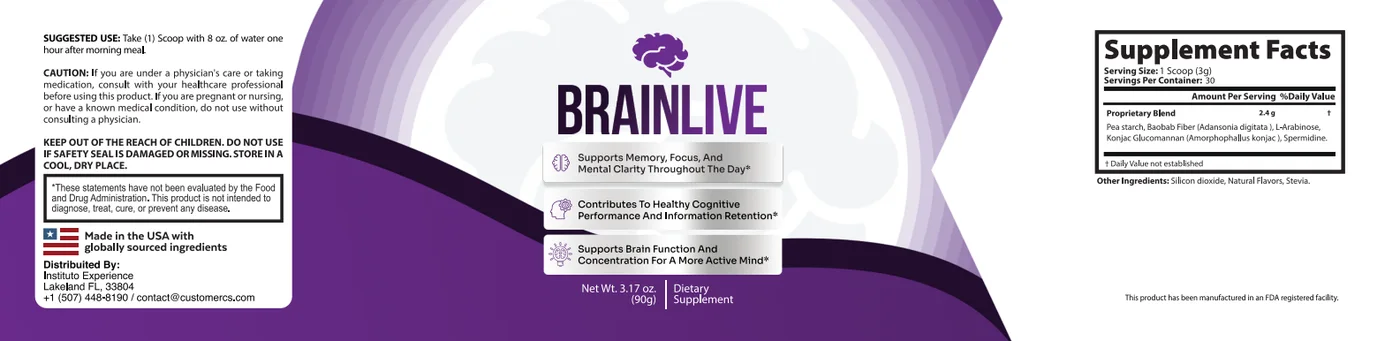
In Brainlive, konjac glucomannan is used as one soluble fiber within a broader prebiotic blend rather than as a single high-dose fiber supplement. That design choice is deliberate: instead of relying on one fiber to do everything, Brainlive combines konjac with complementary prebiotics so a wider range of gut bacteria has something to ferment. The table below shows where konjac sits among the fiber and prebiotic ingredients on the label.
| Ingredient | Type | Role in the blend |
|---|---|---|
| Konjac glucomannan | Soluble, gel-forming fiber | Viscous prebiotic and satiety fiber; the focus of this guide. |
| Pea starch | Resistant starch | Reaches the lower gut to feed beneficial bacteria. |
| Baobab fiber | Fruit fiber | A traditional African food rich in soluble prebiotic fiber. |
| L-arabinose | Plant sugar | Studied for how the body handles dietary carbohydrates. |
| Spermidine | Polyamine | Found in foods like wheat germ; studied for cellular renewal. |
The precise amount of konjac glucomannan per scoop is printed on the Supplement Facts panel, and because fiber blends are best judged by the whole label rather than one line, we always point readers to it directly. You can review the complete formula in the ingredients section, or read our companion piece on how to improve memory and focus naturally to see where fiber fits among everyday habits.
Is konjac glucomannan safe, and how should you take it?
Konjac glucomannan is generally well tolerated by healthy adults when it is taken with plenty of water, which is the single most important rule for using it safely. Because the fiber swells so aggressively, it must hydrate in the stomach rather than the throat, so it should always be mixed into or followed by a full glass of liquid and never taken as a dry powder. Some people notice mild gas or bloating when they first add any fermentable fiber, which usually settles as the gut adjusts; starting low and building up helps. As with any supplement, this is general information rather than medical advice.
Speak with your doctor before starting if you are pregnant or nursing, under 18, take any medication (soluble fiber can slow the absorption of some drugs, so timing matters), have difficulty swallowing, or manage a diagnosed digestive or metabolic condition. A short conversation makes sure a fiber like this fits safely alongside the rest of your care.
Frequently asked questions
What is konjac glucomannan fiber?
Konjac glucomannan is a soluble dietary fiber extracted from the tuber of the konjac plant (Amorphophallus konjac). It is highly water-absorbent, forms a thick gel in the digestive tract, and has been eaten as a food in East Asia for centuries in the form of shirataki noodles and konnyaku.
Is glucomannan a prebiotic fiber?
Yes. Because glucomannan is fermentable by the bacteria in the large intestine, it acts as a prebiotic, feeding beneficial microbes that produce short-chain fatty acids. This fermentation is part of the gut-brain conversation that Brainlive’s fiber blend is designed to support.
How does konjac glucomannan help with satiety?
Glucomannan absorbs many times its weight in water and forms a viscous gel that expands in the stomach and slows gastric emptying. This can create a fuller feeling and steadier digestion, which is why it is one of the most studied satiety fibers, though it is a food-based support and not a weight-loss drug.
How much konjac glucomannan is in Brainlive?
Brainlive uses konjac glucomannan as one fiber within a multi-fiber prebiotic blend rather than as a standalone high-dose fiber. The exact amount per scoop is listed on the Supplement Facts panel on the product page; always follow the label and mix the powder with plenty of water.
Is konjac glucomannan safe to take?
For most healthy adults, konjac fiber is well tolerated when taken with enough water. It should always be consumed with a full glass of liquid so it hydrates in the stomach rather than the throat. People who are pregnant, on medication, or managing a health condition should speak with a doctor first.
Does konjac fiber support brain health directly?
Not directly. Konjac glucomannan supports the gut, and a well-fed gut microbiome is part of the two-way gut-brain axis. Its role in Brainlive is to nourish that ecosystem as part of everyday wellness, not to diagnose, treat or cure any condition.
Check today's Brainlive pricing →
Brainlive is a dietary supplement, not a treatment for any medical condition. These statements have not been evaluated by the Food and Drug Administration. This product is not intended to diagnose, treat, cure or prevent any disease. Always consult a qualified healthcare professional about your individual needs.
References & further reading
- Examine.com. Glucomannan (konjac fiber) — evidence-based summary. examine.com/supplements/glucomannan
- National Center for Complementary and Integrative Health (NCCIH). Prebiotics and Probiotics: What You Need To Know. nccih.nih.gov/health/probiotics-what-you-need-to-know
- Sood N, Baker WL, Coleman CI. Effect of glucomannan on plasma lipid and glucose concentrations, body weight, and blood pressure: systematic review and meta-analysis. American Journal of Clinical Nutrition, 2008. pubmed.ncbi.nlm.nih.gov/18842808
- Carlson JL, Erickson JM, Lloyd BB, Slavin JL. Health effects and sources of prebiotic dietary fiber. Current Developments in Nutrition, 2018. ncbi.nlm.nih.gov/pmc/articles/PMC6041804
- Mayo Clinic. Dietary fiber: Essential for a healthy diet. mayoclinic.org/…/fiber/art-20043983
- Gibson GR, Hutkins R, Sanders ME, et al. Expert consensus document: the ISAPP consensus statement on the definition and scope of prebiotics. Nature Reviews Gastroenterology & Hepatology, 2017. pubmed.ncbi.nlm.nih.gov/28611480
- Slavin J. Fiber and prebiotics: mechanisms and health benefits. Nutrients, 2013. pubmed.ncbi.nlm.nih.gov/23609775
These references describe the ingredient and dietary fiber in general terms and do not constitute evidence that any product treats, cures or prevents any condition.
Keep reading: the gut-brain axis explained · how to improve memory and focus naturally · the best foods for brain health and memory · the Brainlive review.