Sharper memory and focus after 50 with Brainlive: what actually helps

Updated September 2026 · reviewed by the Brainlive Research Team. We are an independent information resource, not a medical provider, and this article is educational rather than medical advice.
Memory and focus after 50 is the everyday experience of a healthy mind that recalls a little slower and searches a beat longer for names — a normal part of aging that responds strongly to sleep, movement, nutrition and gut habits. It is not a disease, and small daily choices, alongside your doctor’s guidance, do the most to keep midlife thinking clear and steady.
What genuinely supports memory and focus after 50, without the hype.
- What is happening
- Recall speed and word-finding can slow with age; this is normal and different from disease, and it is highly responsive to daily habits.
- Biggest levers
- Consistent sleep and regular movement matter most, closely followed by fiber-rich food, hydration and managing stress.
- Quick win
- A daily walk plus a screen break can steady attention within an afternoon, at any age.
- Where Brainlive fits
- A once-daily prebiotic-fiber and spermidine scoop can support the routine, but it is not a treatment for any condition.
- Timeframe
- Sleep and movement can help within days; gut-focused nutrition usually builds over weeks to a few months, and results vary.

Walking into a room and forgetting why, or losing a familiar name mid-sentence, becomes more common as the years add up. For most people over 50 this is a normal shift in how quickly the brain retrieves information, not a warning sign. This guide explains what changes, which levers help most, and where a formula like Brainlive can play a supporting role in an active midlife routine.
What changes about memory and focus after 50?
Memory changes after 50 are mostly a matter of speed, not loss: the healthy older brain still forms and keeps memories, but it retrieves them a little more slowly and is more easily interrupted by distraction. Processing speed and multitasking tend to dip first, which is why juggling several tasks feels harder than it used to. Meanwhile, vocabulary, judgment and accumulated knowledge often stay stable or even improve. Understanding this pattern separates the ordinary friction of aging from the kind of change that deserves a doctor’s attention.
Is slower recall a normal part of aging?
For most people, yes. Occasional word-finding pauses, needing lists more than you once did, or taking longer to learn an unfamiliar app are typical of healthy aging and do not, on their own, signal disease. What is not typical is memory loss that disrupts daily life, worsens noticeably over months, or arrives with confusion, disorientation or personality changes.
Why does focus feel different for older adults?
Focus feels different after 50 because attention is a limited resource that both aging and modern life spend quickly. The brain filters distractions a little less efficiently with age, so an open inbox or a noisy room pulls harder at concentration than it once did. Layer on the common midlife realities — interrupted sleep, higher stress, more medications, and long sedentary stretches at a desk — and the familiar afternoon fog sets in. Each of those factors, encouragingly, is something you can nudge in a better direction.

What are the biggest lifestyle levers after 50?
The biggest levers for memory and focus after 50 are the same everyday habits that support the whole body, and they compound. National Institute on Aging guidance points to sleep, physical activity, nutrition, social connection and mental stimulation as the pillars of cognitive health in later life.
Does sleep still matter as much after 50?
Sleep is the single most important lever for memory at any age. During deep and REM sleep the brain replays and files the day’s experiences, moving them from fragile short-term storage into durable long-term memory. After 50, sleep often becomes lighter and more easily broken, which makes protecting it a priority. Aim for a consistent seven-to-nine hours, keep a regular bedtime, dim screens an hour before, and keep the bedroom cool and dark.
How much movement do you actually need?
Physical activity is close behind sleep for the aging brain. Aerobic movement increases blood flow to the brain and supports the hippocampus, the region most involved in forming new memories. You do not need a gym or a marathon: a brisk daily walk, cycling, swimming, gardening or bodyweight exercise all count, and adding light strength work twice a week helps protect the muscle and balance that keep you active. A systematic review and meta-analysis by Northey et al., British Journal of Sports Medicine, 2018 found that exercise interventions improved cognitive function in adults older than 50.
What should you eat for brain health as you age?
What you eat feeds both the brain and the gut microbes that talk to it. Diets rich in vegetables, fruit, whole grains, beans, nuts, olive oil and fish — the Mediterranean and MIND patterns — are the most consistently linked to healthy aging of the mind. A practical anchor is fiber: building prebiotic fiber into every meal feeds the beneficial gut bacteria of the gut-brain axis, the two-way conversation between gut and brain that sits at the heart of Brainlive’s formula. A dietary pattern along these lines was associated with slower cognitive decline in Morris et al., Alzheimer’s & Dementia, 2015. If that is the part you came for, read whether brain supplements really work next.
Can you train attention at any age?
Attention is trainable long past 50. Single-tasking, short focused sprints with real breaks, and a few minutes of slow breathing each day all strengthen concentration and lower the stress that clouds memory. Learning something genuinely new and staying socially connected give the brain the novelty and challenge that keep it flexible.
See what is in every Brainlive scoop →
Where does Brainlive fit into an over-50 routine?
Brainlive is a once-daily drink-mix scoop designed to support the gut-brain axis, not a treatment for any age-related condition. It brings together prebiotic fibers with L-arabinose and spermidine, nutrients that have become part of the brain-and-gut conversation in aging research. It works best as one small, repeatable step on top of the sleep, movement and food habits above — not as a replacement for them. An observational analysis by Schwarz et al., NeuroImage, 2020 linked higher dietary spermidine intake with cortical thickness and hippocampal volume in older adults.

| Nutrient | What it is | Traditional / general role |
|---|---|---|
| Pea starch | Resistant starch | A prebiotic fiber that reaches the lower gut, where it feeds the beneficial bacteria of the gut-brain axis. |
| Baobab fiber | Fruit fiber | A traditional African food, naturally rich in soluble prebiotic fiber. |
| Konjac glucomannan | Soluble fiber | One of the most studied prebiotic and satiety fibers, long used as a food in East Asia. |
| L-arabinose | Plant sugar | Studied for its role in how the body handles dietary carbohydrates and steadier everyday energy. |
| Spermidine | Polyamine | Occurs naturally in wheat germ and aged foods; studied for autophagy, the body’s cellular renewal. |
For a closer look at the mechanism, read our explainer on the gut-brain axis, or see the habit-by-habit playbook in how to improve memory and focus naturally. The full ingredients section lists every amount.
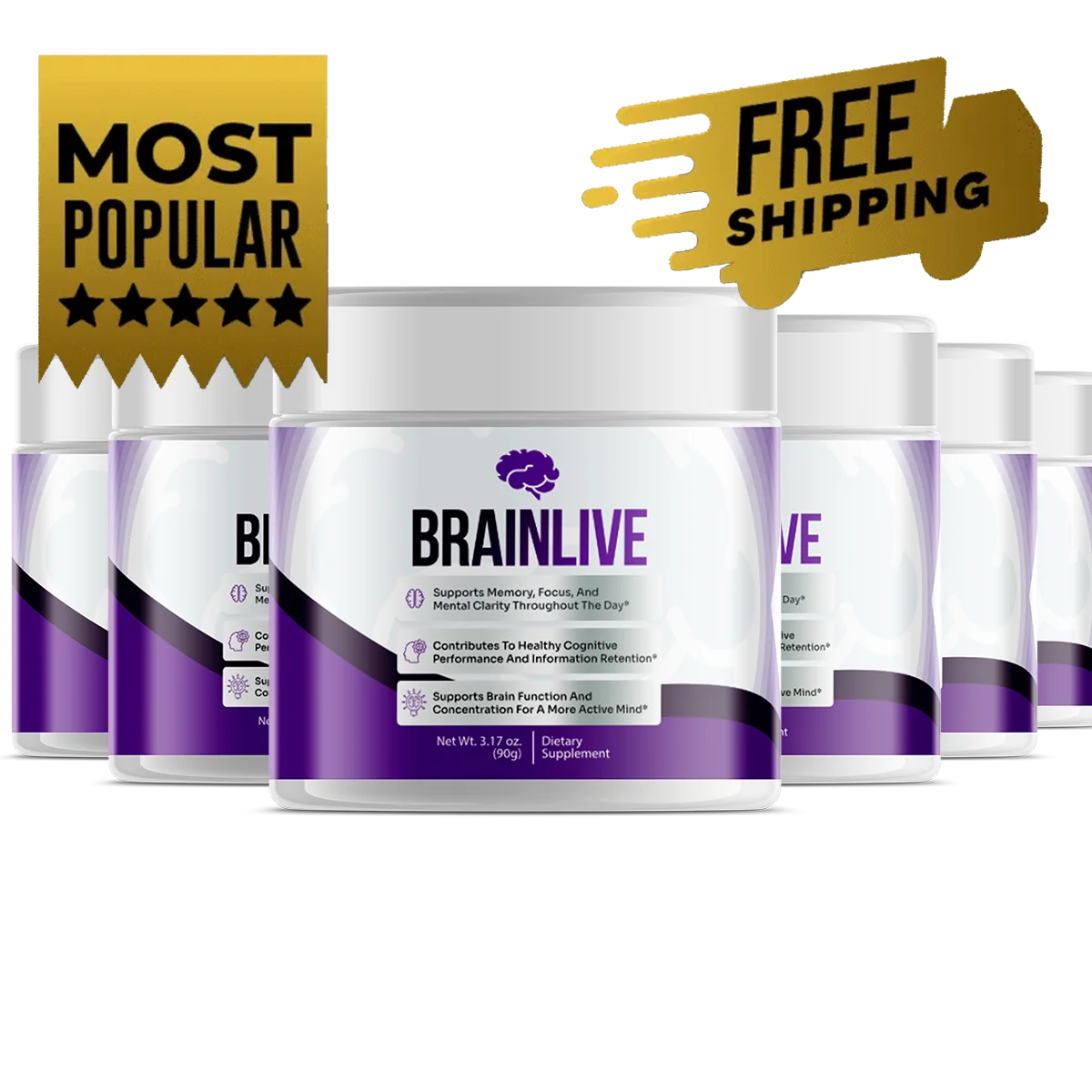
Make it a daily habit after 50
Brainlive is a once-daily scoop pairing prebiotic fibers with L-arabinose and spermidine. The six-tub bundle is the best value at $49 per tub, with free U.S. shipping and a 60-day money-back guarantee.
Check today’s Brainlive pricing — from $49/tubHow do you build a simple daily routine for a sharper mind?
The best routine after 50 is the one you will actually keep. Rather than overhauling everything at once, stack one small habit at a time until each feels automatic:
- Anchor a consistent wake and sleep time so memory gets its overnight filing done.
- Take a 10-minute walk after your largest meal, or between tasks at your desk.
- Add strength work twice a week to protect the muscle and balance that keep you active.
- Build prebiotic fiber into every meal — vegetables, beans, whole grains and fruit.
- Single-task in short sprints, hydrate first, and keep caffeine to the morning.
- Take any supplement at the same time daily — for Brainlive, one scoop stirred into water after breakfast.
Which age-related memory tips work fastest?
A "fast" habit is one you can feel within a day or two; a "slow" habit reshapes your baseline over weeks. Both matter after 50. This table sorts the core levers by speed and everyday effort.
| Habit | Typical time to notice | Everyday effort |
|---|---|---|
| Screen break + short walk | Same day | Low |
| Hydration through the day | Same day | Low |
| Consistent sleep schedule | Days | Medium |
| Higher-fiber, whole-food meals | Days to weeks | Medium |
| Regular aerobic + strength activity | Weeks | Medium |
| Gut-focused nutrition & supplements | Weeks to months | Higher |
Consistency turns any of these into a steadier month. Because gut-focused nutrients build their support gradually, most people over 50 choose a multi-month supply so they do not run out mid-routine — compare the packages and pricing on the homepage.

When should memory changes prompt a doctor visit?
Everyday habits are for supporting an already-healthy mind, not a replacement for medical care. See your doctor if memory loss disrupts daily life, worsens noticeably over a few months, or arrives with confusion, getting lost in familiar places, difficulty following conversations, or changes in mood or personality. Also check in if you are pregnant or nursing, take medication, or have a diagnosed condition before adding any supplement.
Frequently asked questions
Is it normal for memory and focus to change after 50?
Yes. Some slowing of recall speed and word-finding is a normal part of healthy aging, and it is different from disease. Most midlife memory changes respond well to sleep, movement, nutrition and stress habits.
What is the single best habit for memory over 50?
Consistent sleep. During deep and REM sleep the aging brain still consolidates the day’s experiences into lasting memory, so a regular seven-to-nine-hour schedule does more for recall than any single food or supplement.
Can prebiotic fiber and spermidine help focus for older adults?
They are part of the gut-brain conversation studied in aging: prebiotic fibers feed beneficial gut bacteria and spermidine is researched for cellular renewal. They support good habits rather than treat any condition, and results vary.
How long does it take to notice a difference after 50?
Sleep, hydration and movement can help within days, while nutrition and gut-focused habits usually build over several weeks to a few months. Brainlive’s nutrients work gradually and individual results vary.
Does exercise still sharpen the mind after 50?
Yes. Regular aerobic activity increases blood flow to the brain and supports the hippocampus, the region central to forming new memories, so even a daily walk can help attention at any age.
When should midlife memory changes prompt a doctor visit?
See your doctor if memory loss disrupts daily life, worsens quickly, or comes with confusion, getting lost in familiar places or mood changes. Those signs go beyond normal aging and deserve a professional evaluation.
Try Brainlive risk-free for 60 days →
Brainlive is a dietary supplement, not a treatment for any medical condition. These statements have not been evaluated by the Food and Drug Administration. This product is not intended to diagnose, treat, cure or prevent any disease. Always consult a qualified healthcare professional about your individual needs.
References & further reading
- National Institute on Aging (NIH). Cognitive Health and Older Adults. nia.nih.gov/health/cognitive-health-and-older-adults
- National Institute on Aging (NIH). Memory, Forgetfulness, and Aging: What’s Normal and What’s Not. nia.nih.gov/health/memory-forgetfulness-and-aging
- Mayo Clinic. Memory loss: When to seek help. mayoclinic.org/memory-loss/art-20046518
- Northey JM, Cherbuin N, Pumpa KL, Smee DJ, Rattray B. Exercise interventions for cognitive function in adults older than 50: a systematic review with meta-analysis. British Journal of Sports Medicine, 2018. pubmed.ncbi.nlm.nih.gov/28438770
- Examine.com. Spermidine — evidence-based summary. examine.com/supplements/spermidine
- Morris MC, Tangney CC, Wang Y, et al. MIND diet slows cognitive decline with aging. Alzheimer’s & Dementia, 2015. pubmed.ncbi.nlm.nih.gov/26086182
- Schwarz C, Horn N, Benson G, et al. Spermidine intake is associated with cortical thickness and hippocampal volume in older adults. NeuroImage, 2020. pubmed.ncbi.nlm.nih.gov/32629145
These references describe the ingredients and habits in general terms and do not constitute evidence that any product treats, cures or prevents any condition.
Keep reading: how to improve memory and focus naturally · the best foods for brain health and memory · back to the Brainlive blog · homepage.