How to support brain energy naturally with Brainlive

Updated September 2026 · reviewed by the Brainlive Research Team. We are an independent information resource, not a medical provider, and this article is educational rather than medical advice.
To support brain energy naturally means fuelling steady mental energy through balanced meals, stable blood sugar, sleep, hydration and movement — and, if you choose, stimulant-free nutrients like prebiotic fibers and L-arabinose — rather than borrowing a quick lift from caffeine. The goal is even, all-day focus without the crash, built from small habits that stack.
How to keep everyday mental energy steady without leaning on stimulants.
- The goal
- Even, all-day focus — fewer sharp peaks and afternoon crashes, and no jittery comedown from a fourth coffee.
- Biggest levers
- Balanced meals and steady blood sugar, backed by sleep, water and movement, do more for daily energy than any stimulant.
- Quick win
- Add fiber and protein to lunch so the meal releases its fuel slowly and the afternoon slump lands softer.
- Where Brainlive fits
- A caffeine-free scoop pairing prebiotic fibers with L-arabinose to support a blood-sugar-steady routine — not a treatment for any disease.
- Timeframe
- Meal and hydration tweaks help within a day or two; gut-focused nutrients build over several weeks, and results vary.

If your mornings feel sharp but your afternoons dissolve into fog and a fourth coffee, you have met the everyday energy crash. The instinct is to reach for a stimulant, yet the most reliable route to steady mental energy runs through your plate, your blood sugar and your sleep. This guide walks through those stimulant-free levers and shows where a formula like Brainlive can play a supporting role.
What does it mean to support brain energy naturally?
Supporting brain energy naturally is the practice of keeping your mental fuel steady through food, sleep, hydration, movement and gut health, instead of forcing short bursts with caffeine or sugar. Your brain is a hungry organ — it uses roughly a fifth of your daily energy — and it runs best on a smooth supply of glucose rather than a series of spikes and crashes. Two ideas anchor everything below: steady beats spiky, and these habits stack — each smooths the curve a little, and together they keep you clear for longer.
Why does mental energy crash in the afternoon?
The classic afternoon slump is the collision of two forces: a natural post-lunch dip in your circadian rhythm, and a blood-sugar rollercoaster set off by a refined-carb meal. A sandwich, chips and a soda flood the bloodstream with sugar, the body answers with a wave of insulin, and an hour later the sugar has fallen below where it started — leaving you foggy and reaching for the nearest stimulant. Short sleep and dehydration deepen the dip. The good news is that every one of those factors is something you can nudge the other way, and the biggest lever is how sharply your meals move your blood sugar.
How do balanced meals keep energy steady?
A balanced meal keeps energy steady by releasing its fuel slowly, which flattens the spike-and-crash curve that leaves you foggy an hour later. The practical formula is to build every plate around three things that slow digestion: fiber from vegetables, beans and whole grains; protein from eggs, fish or legumes; and healthy fats from olive oil, nuts or avocado. Together they turn a fast sugar hit into a slow, even drip — exactly what an energy-hungry brain prefers.

What should a brain-steady plate look like?
Picture half the plate as non-starchy vegetables, a quarter as protein, and a quarter as slow carbohydrates like oats, quinoa or sweet potato, with a little fat for staying power. Swap the mid-afternoon candy bar for nuts and fruit, and drink water before you assume you are tired — mild dehydration mimics fatigue almost exactly. This is not about restriction; it is about the pairing that keeps your fuel line smooth.
Why does blood-sugar steadiness matter for focus?
Blood-sugar steadiness matters because the brain has no fuel reserve of its own and depends on a moment-to-moment supply of glucose; when that supply spikes and dips, attention and mood ride the same wave. Keeping the curve gentle — through fiber-rich meals, protein pairing and sensible portions — is one of the most direct ways to protect natural focus energy across a working day. The table below sorts the common energy drains and the steadier swap for each. A dose-response study in humans by Krog-Mikkelsen et al., American Journal of Clinical Nutrition, 2011 measured how much L-arabinose is needed to blunt the rise in blood glucose after a sucrose load. If that is the part you came for, read L-arabinose, the plant sugar in the blend next.
| Energy drain | What happens | Steadier swap |
|---|---|---|
| Refined-carb lunch | Fast sugar spike, then a crash | Add fiber, protein and fat to slow release |
| Skipping meals | Blood sugar dips too low; focus drops | Regular, balanced meals and a fiber snack |
| Sugary pick-me-up | Brief lift, sharper crash after | Nuts and fruit, or water first |
| Late-day caffeine | Masks tiredness, disturbs night sleep | Keep caffeine to the morning |
| Dehydration | Mimics fatigue, dulls concentration | Sip water before you feel thirsty |
See what is in every Brainlive scoop →
How does Brainlive's L-arabinose plus fiber approach help?
Brainlive is a caffeine-free daily scoop that pairs prebiotic fibers with L-arabinose to support the same blood-sugar-steady, stimulant-free routine this guide describes. Rather than pushing your system with a stimulant, it leans into the two levers that keep energy even: slowing how quickly a meal releases sugar, and feeding the gut bacteria that form part of the gut-brain axis. It is a supplement to good habits, not a substitute or a treatment for any condition.
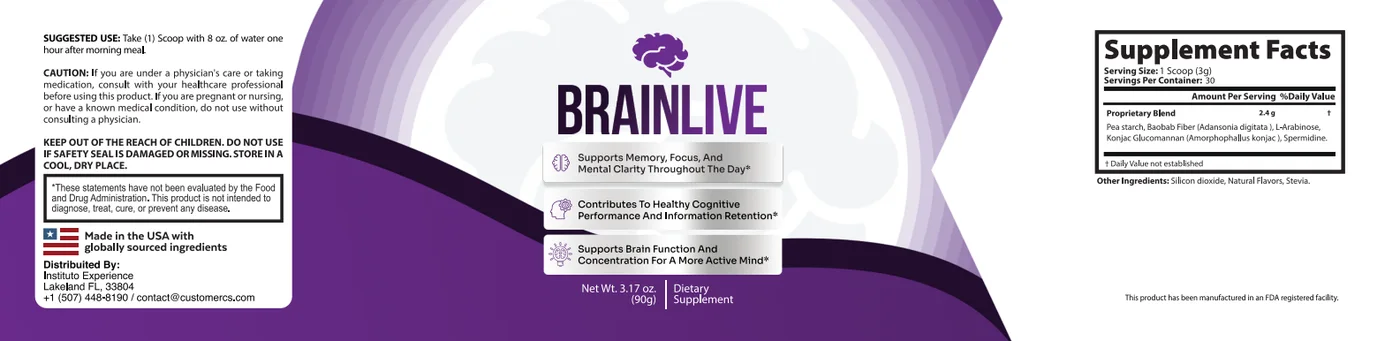
| Nutrient | What it is | Role in steady energy |
|---|---|---|
| L-arabinose | Plant sugar | Studied for how the body handles table sugar — part of a blood-sugar-steady approach. |
| Pea starch | Resistant starch | A prebiotic fiber that slows how quickly a meal releases its fuel. |
| Baobab fiber | Fruit fiber | A traditional African food, rich in soluble prebiotic fiber. |
| Konjac glucomannan | Soluble fiber | One of the most studied satiety and prebiotic fibers. |
| Spermidine | Polyamine | Occurs in foods like wheat germ; studied for cellular renewal. |
Brainlive brings these together in one naturally flavored scoop rather than a pill or an energy drink. For the gut side of the story, read our guide to the gut-brain axis, or see the full ingredients section.

A caffeine-free scoop for steadier days
Brainlive is a once-daily drink mix pairing prebiotic fibers with L-arabinose — no stimulants, no crash. The six-tub bundle is the best value at $49 per tub, with free U.S. shipping and a 60-day guarantee.
Check today's Brainlive pricing — from $49/tubCan you get steady energy without stimulants?
For most healthy people, stimulant-free energy is not only possible but more sustainable, because it builds a steadier baseline instead of borrowing from later in the day. Caffeine has its place, but relying on it to paper over a crash tends to disturb the sleep your energy depends on, which deepens the very tiredness you are fighting. Food, fiber, water, daylight and a short walk after lunch give a calmer lift with no comedown — think of stimulants as an occasional top-up and habits as the foundation. The mechanisms by which fiber and prebiotics act are summarised by Slavin, Nutrients, 2013.
Does a short walk really help energy?
Yes. A brisk 10-minute walk after your largest meal does two things at once: it blunts the post-meal blood-sugar spike by putting your muscles to work, and it increases blood flow to the brain, which lifts alertness. It is one of the highest-return, lowest-effort habits for beating the afternoon slump.
How do you build a stimulant-free energy routine?
The best routine is the one you will keep. Rather than overhauling everything at once, stack one small habit at a time until each feels automatic: The sucrase-inhibiting effect itself was first characterised by Seri et al., Metabolism, 1996.
- Build fiber and protein into every meal so fuel releases slowly and the crash softens.
- Hydrate first, caffeinate early — water before you assume you are tired, coffee kept to the morning.
- Take a 10-minute walk after your largest meal to blunt the sugar spike and lift alertness.
- Protect a consistent sleep schedule, because no daytime habit outruns a sleep debt.
- Swap the sugary pick-me-up for nuts and fruit.
- Take any supplement at the same time daily — for Brainlive, one scoop in water after breakfast.
Because gut-focused nutrients build their support gradually, most people choose a multi-month supply so they do not run out mid-routine — compare the packages and pricing, or read our companion guide to improving memory and focus naturally.

When should you talk to a doctor?
Natural habits support an already-healthy mind and steady everyday energy; they are not a replacement for medical care. Persistent fatigue can have medical causes — from thyroid issues to anemia to sleep disorders — that food and fiber will not fix. Speak with your doctor if you are pregnant or nursing, under 18, take any medication, have a diagnosed condition such as diabetes, or notice unexplained or worsening tiredness.
Frequently asked questions
Can you get steady brain energy naturally without caffeine?
For most healthy people, yes. Steady mental energy comes mainly from balanced meals, stable blood sugar, sleep and movement — not stimulants. Caffeine borrows energy from later in the day, while these habits build a steadier baseline that prebiotic fibers can support.
Why do I get an afternoon energy slump?
The mid-afternoon slump usually follows a fast rise and fall in blood sugar after a refined-carb lunch, on top of your natural circadian dip. A meal that pairs fiber, protein and slower carbohydrates flattens that curve, so attention fades less sharply.
What is L-arabinose and how does it relate to energy?
L-arabinose is a plant sugar studied for its role in how the body handles table sugar and carbohydrates. In Brainlive it sits alongside prebiotic fibers as part of a stimulant-free, blood-sugar-steady approach to energy. It supports habits, not a treatment for any condition.
How do fiber and blood-sugar steadiness affect focus?
Fiber slows how quickly a meal releases sugar into the bloodstream, softening the spike-and-crash pattern that leaves you foggy an hour later. Steadier fuel means steadier attention, so higher-fiber meals are one of the simplest levers for even, all-day focus.
How long until Brainlive supports steadier energy?
Meal timing, hydration and movement can help within a day or two, while gut-focused nutrients such as prebiotic fibers usually build their support over several weeks. Brainlive works gradually rather than like a stimulant, and individual results vary.
Is stimulant-free energy better than caffeine?
Neither is inherently better, but they work differently. Caffeine gives a fast, temporary lift and can disturb sleep if taken late; a stimulant-free approach builds a calmer, steadier baseline with no crash. Many people keep a morning coffee and lean on food, fiber and hydration for the rest of the day.
Try Brainlive risk-free for 60 days →
Brainlive is a dietary supplement, not a treatment for any medical condition. These statements have not been evaluated by the Food and Drug Administration. This product is not intended to diagnose, treat, cure or prevent any disease. Always consult a qualified healthcare professional about your individual needs.
References & further reading
- Harvard T.H. Chan School of Public Health. Carbohydrates and Blood Sugar. hsph.harvard.edu/nutritionsource/carbohydrates/carbohydrates-and-blood-sugar
- National Center for Complementary and Integrative Health (NCCIH). Probiotics: What You Need To Know. nccih.nih.gov/health/probiotics-what-you-need-to-know
- Mayo Clinic. Dietary fiber: Essential for a healthy diet. mayoclinic.org/healthy-lifestyle/nutrition-and-healthy-eating/in-depth/fiber/art-20043983
- Krog-Mikkelsen I, Hels O, Tetens I, et al. The effects of L-arabinose on intestinal sucrase activity: dose-response studies in vitro and in humans. American Journal of Clinical Nutrition, 2011. pubmed.ncbi.nlm.nih.gov/21677059
- Examine.com. Glucomannan (konjac fiber). examine.com/supplements/glucomannan
- Seri K, Sanai K, Matsuo N, et al. L-arabinose selectively inhibits intestinal sucrase in an uncompetitive manner and suppresses glycemic response after sucrose ingestion in animals. Metabolism, 1996. pubmed.ncbi.nlm.nih.gov/8931641
- Slavin J. Fiber and prebiotics: mechanisms and health benefits. Nutrients, 2013. pubmed.ncbi.nlm.nih.gov/23609775
These references describe the ingredients and habits in general terms and do not constitute evidence that any product treats, cures or prevents any condition.
Keep reading: the best foods for brain health and memory · the gut-brain axis explained · back to the Brainlive blog · homepage.