Omega-3 for brain health vs prebiotic fiber: the Brainlive guide 2026

Updated September 2026 · reviewed by the Brainlive Research Team. We are an independent information resource, not a medical provider, and this article is educational rather than medical advice.
Omega-3 fatty acids and prebiotic fiber support the brain through two different systems: omega-3s like DHA are structural fats that build neuron membranes, while prebiotic fiber feeds the gut bacteria that communicate with the brain along the gut-brain axis. They are complementary tools, not rivals, and a balanced routine tends to include both. This is educational information, not a treatment for any condition.
Omega-3 vs prebiotic fiber for the brain, settled in one place.
- The short version
- They are not competitors: omega-3s build brain cell membranes from the inside, while prebiotic fiber supports the gut microbes that signal to the brain.
- Omega-3’s job
- DHA is the most abundant omega-3 in brain tissue and is associated with normal brain and eye function; get it from oily fish or a fish-oil supplement.
- Prebiotic fiber’s job
- Fibers like konjac, baobab and resistant starch are fermented into short-chain fatty acids studied as gut-brain signals.
- Where Brainlive fits
- Brainlive is a fiber-and-spermidine drink mix — it complements the omega-3s in your diet rather than replacing them.
- Honest caveat
- The fiber-and-mood research is early, omega-3 evidence is stronger for structure than for “boosting” a healthy brain, and results vary.

Two ideas dominate any brain-nutrition conversation: take your omega-3s, and eat more fiber. Both are sound, yet they are often pitted against each other as if you had to pick a side — you do not. This guide explains what each one does and how a fiber-first formula like Brainlive sits alongside the omega-3s in your diet.
What are omega-3 fatty acids and why does the brain need them?
Omega-3 fatty acids are a family of essential fats — principally EPA, DHA and the plant-derived ALA — that the body cannot make in useful amounts and must get from food. The brain is roughly 60% fat by dry weight, and DHA is the single most abundant omega-3 in its cell membranes. That structural role is why omega-3s matter for the brain: DHA helps form the flexible membranes neurons use to fire and connect, and adequate dietary DHA is associated with normal brain and vision function.
Oily fish are the richest sources, with fish-oil or algal-oil supplements the common stand-ins for people who eat little seafood. When people compare fish oil vs fiber, they are really comparing a structural building block with a gut-ecosystem tool — so the honest answer is usually “both, for different reasons.”
How do omega-3 fatty acids act in the brain?
Omega-3 fatty acids act in the brain as raw material rather than as a stimulant. DHA is woven into neuronal membranes, where it influences how fluid and responsive they are; EPA is studied more for the body’s normal inflammatory balance. Because these fats build into tissue over time, dha brain health is a long-game, dietary story, not an overnight one. A randomised trial of docosahexaenoic acid in age-related cognitive decline was reported by Yurko-Mauro et al., Alzheimer’s & Dementia, 2010.

What is prebiotic fiber and how does it reach the brain?
Prebiotic fiber is a dietary fiber that resists digestion in the upper gut and instead becomes food for the beneficial bacteria in the large intestine. Unlike omega-3, it never enters brain tissue itself. Its influence is indirect: when gut microbes ferment fibers such as konjac glucomannan, baobab fiber and resistant starch, they produce short-chain fatty acids that are increasingly studied as signals along the gut-brain axis. How those short-chain fatty acids signal beyond the gut itself is reviewed by Dalile et al., Nature Reviews Gastroenterology & Hepatology, 2019.
This is the mechanism at the heart of Brainlive: rather than delivering a fat the brain uses directly, prebiotic fiber tends the ecosystem that appears to talk to the brain. It is less settled than the omega-3 story, so the honest framing for prebiotic fiber brain benefits is “promising and plausible,” not “proven to sharpen cognition.” For a deeper look, read our explainer on the gut-brain axis.
Why can’t omega-3 do the gut’s job, and vice versa?
Omega-3 and prebiotic fiber cannot substitute for one another because they operate in different places by different means. Omega-3 is absorbed and built into cells, including brain cells, as a structural fat. Prebiotic fiber is deliberately not absorbed; its whole value is surviving digestion to reach the microbes downstream. A diet flush with fish oil but empty of fiber leaves the gut ecosystem underfed — and vice versa.
Omega-3 vs prebiotic fiber: a side-by-side comparison
A useful way to compare omega-3 fatty acids and prebiotic fiber is to line up how each is delivered, where it acts, and how strong the evidence is. The table below is a snapshot, not medical advice, and none of these nutrients is a treatment for any disease.
| Feature | Omega-3 (EPA / DHA) | Prebiotic fiber |
|---|---|---|
| What it is | Essential structural fat | Non-digestible plant fiber |
| Main sources | Oily fish, fish oil, algal oil | Konjac, baobab, resistant starch, whole plants |
| Where it acts | Inside cells & neuron membranes | In the gut, via the microbiome |
| Route to the brain | Direct — built into tissue | Indirect — gut-brain axis signals |
| Evidence maturity | Well established for structure | Emerging and promising |
| Typical timeframe | Weeks to months | Weeks to months |
| In Brainlive? | No — get it from diet | Yes — the core of the formula |
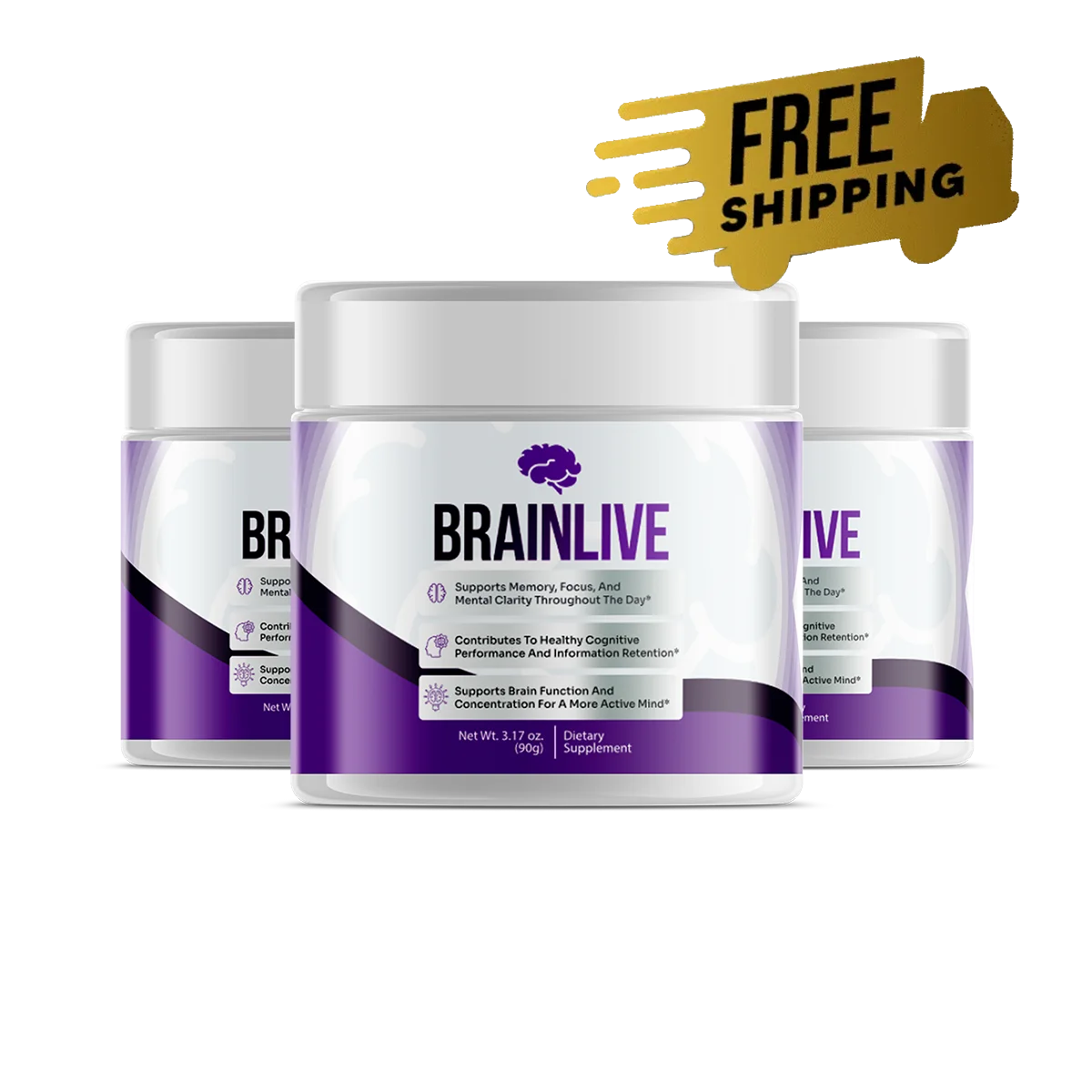
Fill the fiber side of the equation
Brainlive is a once-daily scoop pairing prebiotic fibers with spermidine — the gut-side companion to the omega-3s on your plate.
See what is in every Brainlive scoop →Where does Brainlive fit — and why isn’t it a fish oil?
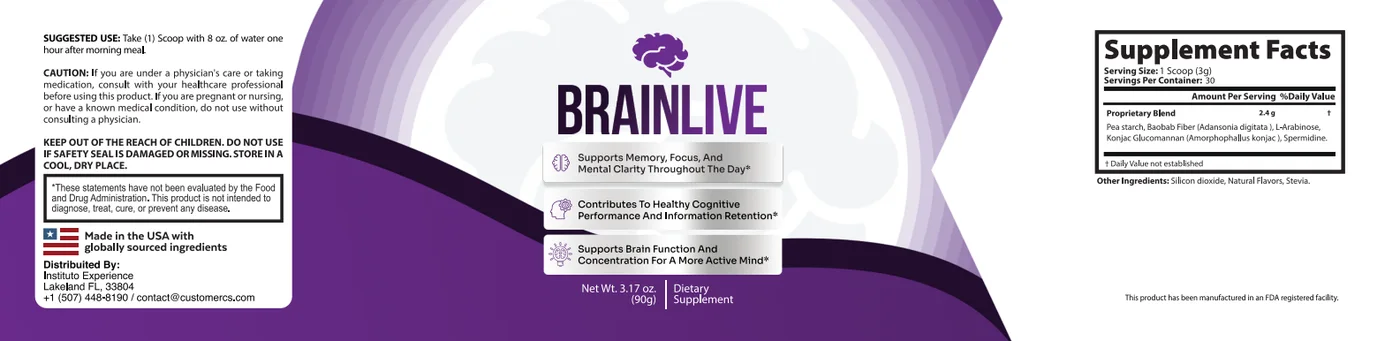
Brainlive is a prebiotic-fiber-and-spermidine drink mix, not an omega-3 supplement, and that is deliberate. Most people already have a familiar path to omega-3s; what far fewer cover well is the fiber side — the average adult falls short of daily fiber targets, and prebiotic fibers are especially easy to miss. Brainlive concentrates on that gap, layering in spermidine, a polyamine studied for its role in autophagy, the body’s natural cellular-renewal process.
In short, Brainlive is built to complement your omega-3 intake, not compete with it: if you already take fish oil, it addresses a different pathway entirely. Here is how the two divide the work.
| Goal | Covered by omega-3 | Covered by Brainlive fiber blend |
|---|---|---|
| Neuron membrane building blocks | Yes (DHA) | No |
| Normal inflammatory balance | Yes (EPA) | Not directly |
| Feeding beneficial gut bacteria | No | Yes (konjac, baobab, resistant starch) |
| Short-chain fatty acid production | No | Yes, via fermentation |
| Cellular-renewal support (autophagy) | No | Studied for spermidine |
| Everyday digestive comfort & satiety | No | Yes (soluble fiber) |
See the full ingredients section, or our deep dives on konjac glucomannan and baobab fiber.
How do you get enough of both in real life?
The practical goal is coverage, not competition: make sure your week reliably includes both omega-3 and prebiotic fiber sources, and let each do its own job. A simple template beats a complicated one:
- Aim for oily fish twice a week, or a fish-oil / algal-oil supplement.
- Build fiber into every meal, plus a dedicated prebiotic like Brainlive for the harder-to-reach fibers.
- Keep the timing consistent — omega-3 with a meal, and your Brainlive scoop at the same time daily.
- Introduce new fiber gradually and drink plenty of water, so your gut adjusts.
- Give it weeks, not days — both build slowly.
Our guide to improving memory and focus naturally puts these nutrients alongside sleep, movement and stress habits — the levers that matter most.
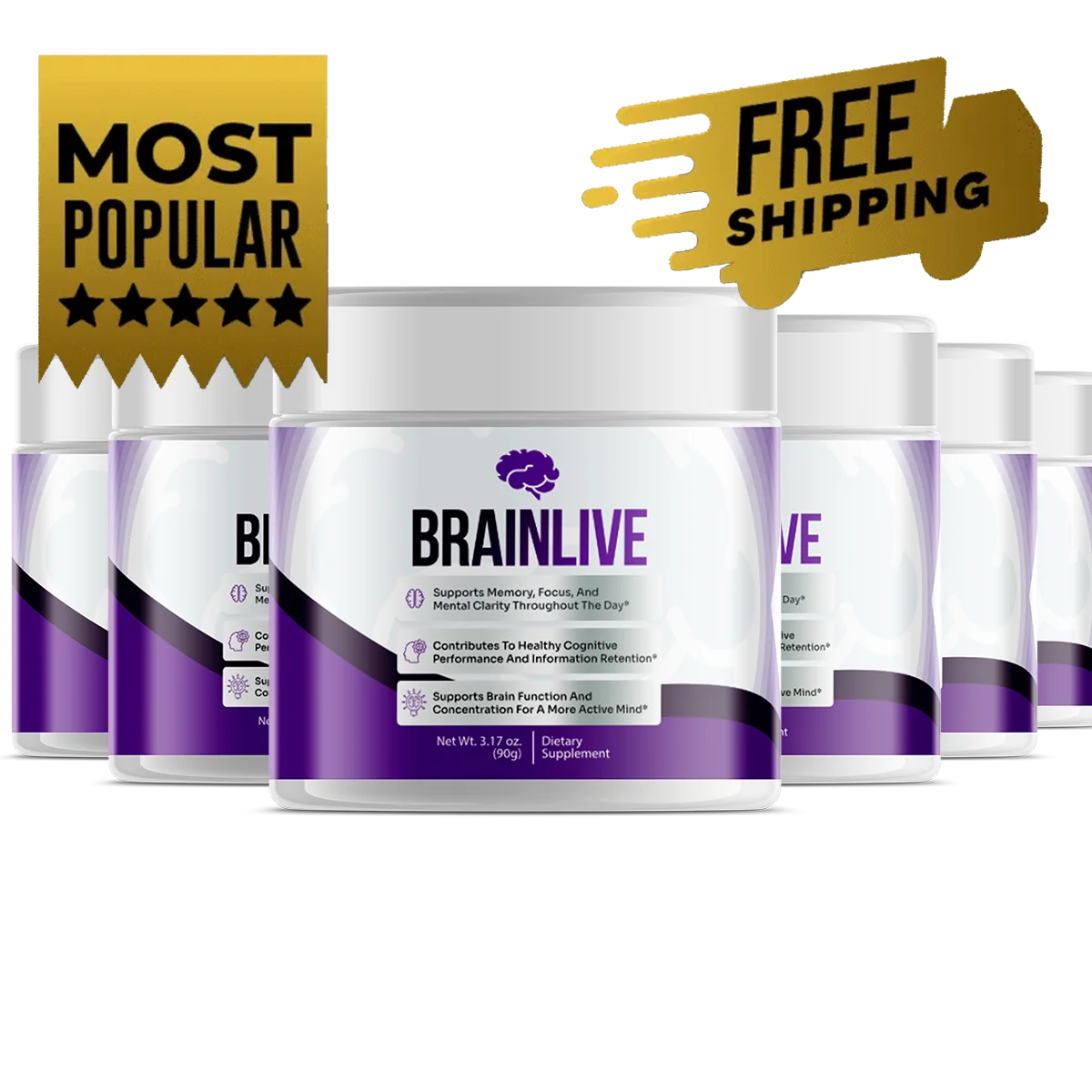
Make the fiber side effortless
Because gut-focused nutrients build gradually, most people choose a multi-month supply. The six-tub bundle is the best value at $49 per tub, with free U.S. shipping and a 60-day guarantee.
Check today’s Brainlive pricing →What does the evidence really say — and where is it weak?
Honesty matters here. The omega-3 evidence base is strongest for structural and nutritional roles — DHA’s presence in brain and eye tissue is well documented — while claims that supplementing omega-3 sharpens an already-healthy adult brain are far more mixed, with large trials often modest or inconsistent. The fiber-and-cognition field is younger still: much of the research is early-stage in humans, and while short-chain fatty acids are plausible messengers, we should not overstate what a fiber scoop does for mood or focus. A larger twelve-month randomised trial by Schwarz et al., JAMA Network Open, 2022 then found no significant benefit for memory, and that is the more cautious result to carry forward.
The responsible conclusion: both nutrients are worth including in a healthy diet, neither is a shortcut, and neither is a treatment for any disease. Supplements like Brainlive are best understood as a convenient way to cover a common dietary gap — not as medicine.
When should you talk to a doctor?
Nutrition tools support an already-healthy body; they are not a replacement for medical care. Speak with your doctor before adding a fish-oil supplement or a new fiber product if you are pregnant or nursing, under 18, take any medication — especially blood thinners, which can interact with high-dose omega-3 — have a diagnosed condition, or notice persistent or worsening symptoms.
Frequently asked questions
Is omega-3 or prebiotic fiber better for brain health?
They work on different systems, so it is not really either-or. Omega-3 fatty acids, especially DHA, are structural building blocks of brain cell membranes, while prebiotic fiber feeds the gut bacteria that talk to the brain through the gut-brain axis. Most balanced routines include both, and results vary.
What does DHA actually do for the brain?
DHA is the most abundant omega-3 fatty acid in brain tissue and helps make up the membranes of neurons. Adequate dietary DHA is associated with normal brain and eye function, though supplementing it is not a treatment for any condition.
Can prebiotic fiber affect mood and focus?
Prebiotic fibers are fermented by gut bacteria into short-chain fatty acids that are being studied as signals along the gut-brain axis. The research is early and promising rather than proven, so fiber is best seen as everyday support, not a cognitive treatment.
Does Brainlive contain omega-3 or fish oil?
No. Brainlive is a prebiotic-fiber-and-spermidine drink mix, not a fish oil. It is designed to complement the omega-3s you already get from food or a separate supplement, not to replace them.
Can I take fish oil and Brainlive together?
For most healthy adults the two address different pathways and are commonly combined, but you should confirm with your doctor first, especially if you take blood thinners or have a medical condition.
How long before omega-3 or fiber makes a difference?
Neither is a quick fix. Omega-3 tissue levels build over weeks to months, and gut-focused fiber habits also compound gradually over several weeks. Consistency matters more than any single dose, and individual results vary.
Try Brainlive risk-free for 60 days →
Brainlive is a dietary supplement, not a treatment for any medical condition. These statements have not been evaluated by the Food and Drug Administration. This product is not intended to diagnose, treat, cure or prevent any disease. Always consult a qualified healthcare professional about your individual needs.
References & further reading
- National Institutes of Health, Office of Dietary Supplements. Omega-3 Fatty Acids — Health Professional Fact Sheet. ods.od.nih.gov/factsheets/Omega3FattyAcids-HealthProfessional
- National Center for Complementary and Integrative Health (NCCIH). Omega-3 Supplements: In Depth. nccih.nih.gov/health/omega3-supplements-in-depth
- Examine.com. Fish Oil — evidence-based summary. examine.com/supplements/fish-oil
- Dalile B, Van Oudenhove L, Vervliet B, Verbeke K. The role of short-chain fatty acids in microbiota-gut-brain communication. Nature Reviews Gastroenterology & Hepatology, 2019. pubmed.ncbi.nlm.nih.gov/31123355
- Mayo Clinic. Omega-3 in fish: How eating fish helps your heart. mayoclinic.org/.../omega-3/art-20045614
- Examine.com. Glucomannan (konjac fiber). examine.com/supplements/glucomannan
- Yurko-Mauro K, McCarthy D, Rom D, et al. Beneficial effects of docosahexaenoic acid on cognition in age-related cognitive decline. Alzheimer’s & Dementia, 2010. pubmed.ncbi.nlm.nih.gov/20434961
- Schwarz C, Benson GS, Horn N, et al. Effects of spermidine supplementation on cognition and biomarkers in older adults with subjective cognitive decline: a randomized clinical trial. JAMA Network Open, 2022. pubmed.ncbi.nlm.nih.gov/35616942
These references describe the nutrients and habits in general terms and do not constitute evidence that any product treats, cures or prevents any condition.
Keep reading: the gut-brain axis explained · the best foods for brain health and memory · read the full Brainlive review · back to the Brainlive blog.